In the intricate world of industrial operations, precision, safety, and efficiency are not just goals; they are imperatives. Modern manufacturing, processing, and utility systems rely heavily on the accurate monitoring and control of various parameters to ensure seamless operation, prevent costly downtime, and protect personnel and assets. At the heart of this operational intelligence lie a suite of critical components: pressure switches, water level switches and sensors, flow sensors, and safety relief valves. These devices, often unseen, are the unsung heroes that provide the vital data and control mechanisms necessary for robust and reliable industrial performance.
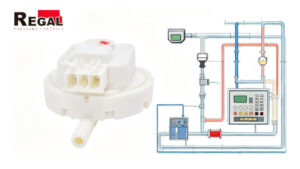
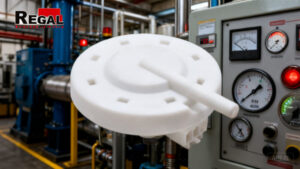
Pressure switches are electromechanical devices designed to detect and respond to changes in fluid or gas pressure. When the pressure reaches a predetermined set point, the switch activates or deactivates an electrical circuit, triggering an action such as starting a pump, sounding an alarm, or shutting down a system. Their reliability and simplicity make them indispensable across a vast array of industries.
مفاتيح ضغط الهواء
- HVAC Systems: Monitor filter status, fan operation, and differential pressure across coils to optimize airflow and energy consumption.
- Pneumatic Systems: Control compressors, air tools, and pneumatic actuators, ensuring consistent operating pressures.
- Dust Collectors: Indicate when filters need cleaning or replacement, maintaining system efficiency and air quality.
مفاتيح ضغط الماء
- Pump Control: Automatically start and stop pumps in water supply systems, irrigation, and fire suppression to maintain desired pressure ranges.
- Industrial Water Treatment: Monitor pressure in filtration systems, reverse osmosis units, and distribution networks to detect blockages or leaks.
- Boiler Systems: Ensure safe operating pressures, preventing over-pressurization and potential damage.
When selecting a pressure switch, critical considerations include the set point and dead band (hysteresis), media compatibility (e.g., stainless steel for corrosive liquids), electrical rating, and the type of pressure being measured (gauge, differential, absolute).
Water Level Management: From Tanks to Treatment Plants
Managing liquid levels is crucial for preventing overflows, protecting pumps from dry running, ensuring consistent product quality, and optimizing storage. Both switches and continuous sensors play vital roles here.
مفاتيح مستوى الماء
These devices provide discrete on/off signals when a liquid reaches a specific level. They are ideal for simple control tasks or alarm functions.
- Float Switches: Common in sumps, tanks, and wastewater applications, using a buoyant float to actuates a switch.
- Conductive Probes: Utilize the electrical conductivity of the liquid to detect its presence between probes, often used in boilers or conductive liquid tanks.
- Optical Switches: Detect the presence or absence of liquid using light refraction, suitable for small tanks or point level detection.
Water Level Sensors (Continuous)
Unlike switches, continuous level sensors provide an analog output proportional to the liquid level, allowing for precise monitoring and control.
- أجهزة استشعار الموجات فوق الصوتية: Emit sound waves that bounce off the liquid surface, measuring the time-of-flight to determine distance. Ideal for non-contact measurement in various tanks.
- أجهزة الاستشعار الهيدروستاتيكية: Measure the pressure exerted by the liquid column above them. Submersible versions are common in deep tanks, wells, and reservoirs.
- أجهزة استشعار الرادار: Use microwave pulses to measure level, offering high accuracy and reliability, especially in challenging environments with foam or vapor.
Choosing the right water level device depends on factors like accuracy requirements, liquid properties (viscosity, corrosiveness), temperature, pressure, and the presence of agitators or foam.
Flow Sensors: Monitoring the Pulse of Fluid Systems
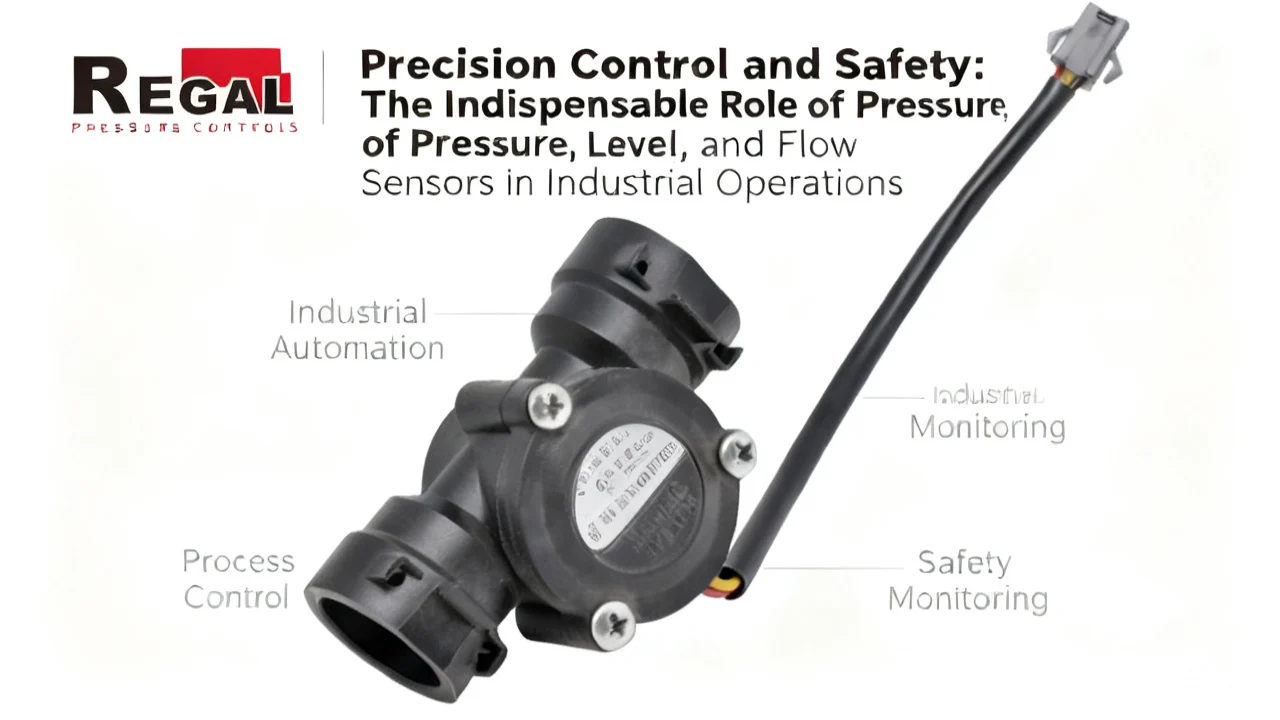
Flow sensors are instrumental in measuring the rate at which fluids (liquids or gases) move through a pipe or channel. Accurate flow measurement is essential for process control, dosing, billing, and detecting leaks or blockages, directly impacting efficiency and product quality.
Common Types of Flow Sensors
- مستشعرات تدفق عجلة التجديف: Cost-effective and widely used for water and low-viscosity liquids. A rotating paddle wheel’s speed is proportional to flow.
- مستشعرات تدفق التوربينات: Highly accurate for clean liquids and gases, using a free-spinning rotor whose rotational speed is proportional to the flow rate.
- مجسات التدفق الحراري الكتلي: Measure flow by detecting the amount of heat transferred away from a heated element by the flowing fluid. Excellent for low gas flow rates.
- Electromagnetic (Magmeter) Flow Sensors: Ideal for conductive liquids, including slurries and wastewater. They create a magnetic field and measure the voltage induced as the liquid flows through it.
- مستشعرات التدفق بالموجات فوق الصوتية: Can be clamp-on (non-invasive) or in-line. They use sound waves to measure flow velocity, suitable for a wide range of liquids and pipe sizes, often used for clean and dirty water.
Applications span from monitoring cooling water in HVAC systems and chemical dosing in water treatment plants to ensuring precise ingredient delivery in food and beverage production and detecting leaks in pipelines.
Safety Relief Valves: The Ultimate Safeguard
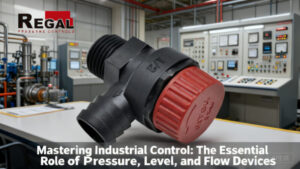
While sensors and switches provide critical monitoring and control, safety relief valves serve as the final line of defense against catastrophic overpressure events. These mechanical devices automatically open when the system pressure exceeds a predetermined set point, discharging fluid until the pressure returns to a safe level, then reclosing.
They are non-negotiable in pressure vessels, boilers, pipelines, and any system where over-pressurization could lead to equipment failure, environmental release, or severe safety hazards. The intelligent integration of precise pressure monitoring (via switches) with the fail-safe mechanism of a safety relief valve creates a truly robust and compliant industrial system.
The Crucial Role of Quality Parts and Integrated Solutions
The performance and longevity of any industrial system are only as good as the quality of its individual components. In B2B environments, compromising on the quality of pressure switches, water level sensors, flow sensors, or safety relief valves is a false economy. Substandard parts can lead to:
- Increased Downtime: Frequent failures necessitate repairs, leading to production halts and lost revenue.
- Safety Risks: Malfunctioning safety devices can have dire consequences for personnel and the environment.
- Inaccurate Data: Poor quality sensors yield unreliable data, leading to suboptimal process control and wasted resources.
- Higher Maintenance Costs: Regular replacement and troubleshooting of unreliable parts drive up operational expenses.
Investing in high-quality, certified parts from reputable manufacturers ensures accuracy, reliability, and compliance with industry standards. Furthermore, considering these components as part of an integrated solution, where each device complements the others, leads to more efficient, safer, and ultimately more profitable operations.
خاتمة
Pressure switches, water level switches and sensors, flow sensors, and safety relief valves are far more than mere components; they are the bedrock of operational excellence in modern industrial settings. By providing precise data, enabling automated control, and offering critical safety mechanisms, these devices empower businesses to optimize processes, enhance safety, reduce waste, and ensure regulatory compliance. For any B2B enterprise aiming for peak performance and unwavering reliability, understanding and strategically implementing these indispensable tools is not just beneficial—it is essential.