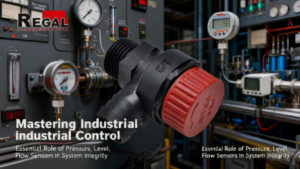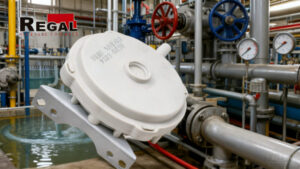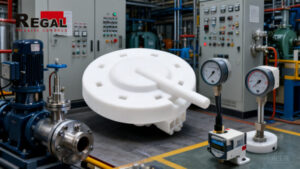
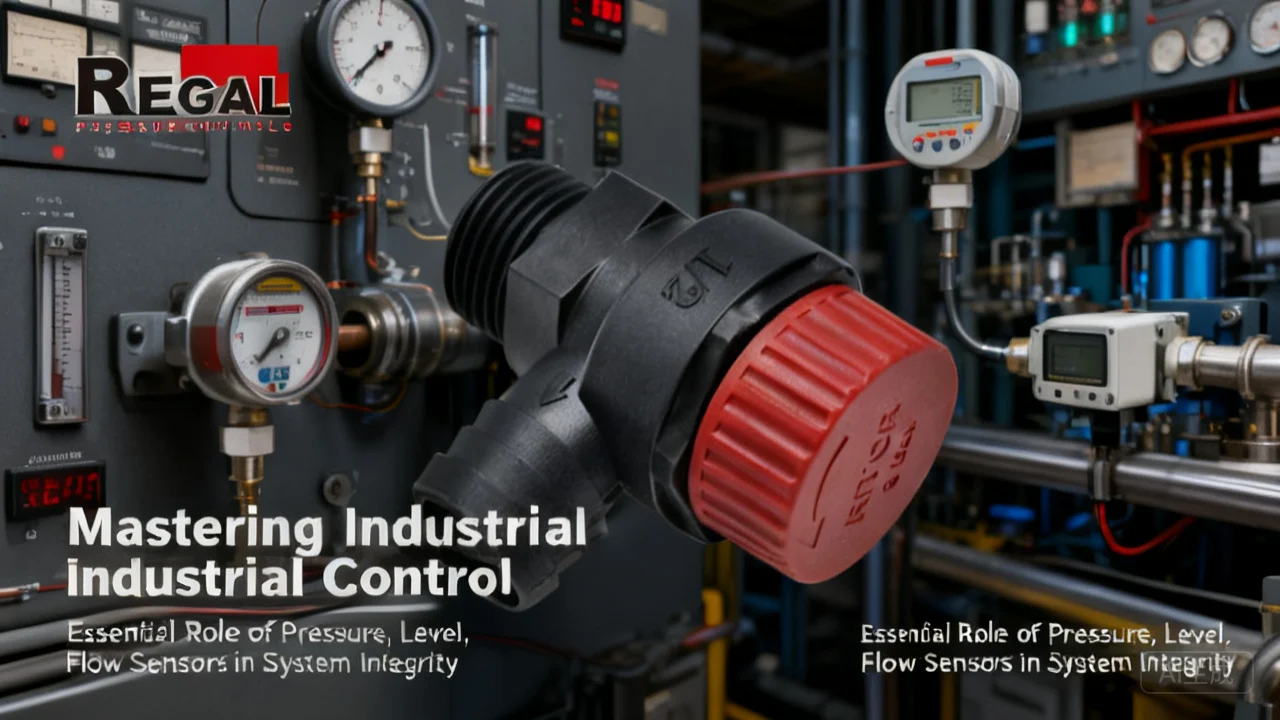
In the intricate world of industrial operations, precision, reliability, and safety are not merely aspirations but fundamental requirements. Beneath the surface of complex machinery and automated processes lie critical components that act as the unseen architects of system integrity: pressure switches, water level switches and sensors, flow sensors, and safety relief valves. These devices are indispensable, forming the backbone of efficient process control, robust safety protocols, and the longevity of equipment across countless industries, from manufacturing and water treatment to HVAC and chemical processing.
Pressure Switches: Guardians of Operational Parameters
Pressure switches are electromechanical devices designed to detect changes in pressure and trigger an action when a preset threshold is reached. Their ability to monitor and respond to pressure fluctuations makes them vital for protecting equipment and optimizing operational efficiency.
- سوئیچهای فشار هوا: Crucial in pneumatic systems, HVAC units, and air compressors, these switches ensure that air pressure remains within specified limits. They prevent over-pressurization that could damage equipment or under-pressurization that could hinder performance, leading to energy savings and extended equipment life.
- سوئیچهای فشار آب: Essential in pumping systems, irrigation networks, and industrial water lines, water pressure switches maintain optimal system pressure. They control pump activation and deactivation, preventing dry-running and ensuring a consistent supply, thereby protecting pumps from damage and preventing costly leaks or bursts.
By providing immediate feedback and control, pressure switches are frontline defenders against system anomalies, ensuring continuous and safe operation.
Water Level Switches & Sensors: Precision in Fluid Management
Managing fluid levels is critical in many industrial applications to prevent overflows, dry-running pumps, and to maintain consistent process quality. Water level switches and sensors offer precise solutions for this challenge.
- سوئیچهای سطح آب: These provide simple, reliable on/off control. Typically, a float mechanism or conductivity probes detect a specific high or low level, activating or deactivating pumps, alarms, or valves. They are ideal for applications requiring straightforward level control, such as sump pumps, wastewater pits, and storage tanks.
- سنسورهای سطح آب: For applications demanding continuous monitoring and more granular data, water level sensors are employed. Technologies like ultrasonic, hydrostatic (pressure-based), and radar sensors provide real-time, analog output of fluid levels. This allows for sophisticated process control, predictive maintenance, and detailed inventory management in tanks, reservoirs, and chemical reactors.
Whether for simple threshold detection or continuous measurement, accurate level monitoring is paramount for preventing costly spills, optimizing resource utilization, and maintaining process stability.
Flow Sensors: Monitoring the Pulse of Your Operations
Flow sensors are instrumental in measuring the rate of fluid movement within a pipe or conduit. Their ability to detect and quantify fluid flow is critical for process control, quality assurance, and resource management.
Applications span a wide range, including:
- Monitoring cooling water circulation in industrial machinery.
- Ensuring accurate chemical dosing in water treatment plants.
- Detecting blockages or leaks in pipelines.
- Optimizing irrigation systems by controlling water distribution.
By providing precise data on fluid velocity or volume per unit time, flow sensors enable operators to optimize consumption, ensure product quality, and prevent costly downtime associated with inefficient or incorrect flow rates. They are the eyes and ears that monitor the very pulse of fluid-based operations.
Safety Relief Valves: The Uncompromising Last Line of Defense
Perhaps no component underscores the importance of safety more profoundly than the safety relief valve. These critical devices are designed to automatically open and discharge excess pressure from a system when it exceeds a predetermined safe limit, thereby preventing catastrophic equipment failure, explosions, and potential harm to personnel and the environment.
Operating on a simple yet highly effective principle, safety relief valves remain closed under normal operating conditions. However, when system pressure escalates dangerously, the valve mechanism – typically a spring-loaded or pilot-operated design – overcomes the set force, allowing the pressurized fluid or gas to escape until the pressure returns to a safe level, at which point the valve re-closes. Their unwavering reliability is non-negotiable, making them mandatory in pressure vessels, boilers, pipelines, and chemical processing equipment to comply with stringent safety regulations and protect valuable assets.
The Unseen Value of Quality Parts
The efficiency, longevity, and safety of any industrial system are inextricably linked to the quality of its individual components. Investing in high-quality pressure switches, level sensors, flow sensors, and safety relief valves is not merely a procurement decision; it’s a strategic investment in operational resilience. Inferior parts can lead to inaccurate readings, premature failure, increased maintenance costs, and, most critically, compromised safety. Quality components offer:
- دوام: Designed to withstand harsh industrial environments.
- دقت: Providing precise and consistent measurements.
- قابلیت اطمینان: Ensuring consistent performance over extended periods.
- انطباق: Meeting stringent industry standards and certifications.
The cost of failure—whether in terms of downtime, equipment damage, or safety incidents—far outweighs the initial investment in premium, certified parts.
Integrated Solutions for Modern Industrial Challenges
These critical components rarely operate in isolation. Instead, they integrate seamlessly into larger control systems, such as Programmable Logic Controllers (PLCs) and Supervisory Control and Data Acquisition (SCADA) systems. The data collected by sensors informs automated decisions, optimizes processes, and enables predictive maintenance strategies. This holistic approach leads to:
- Greater operational efficiency and reduced waste.
- Enhanced safety through proactive monitoring and automatic safeguards.
- Improved product quality and consistency.
- Reduced manual intervention and labor costs.
By leveraging these integrated solutions, industries can achieve unprecedented levels of control and insight into their operations.
نتیجهگیری
Pressure switches, water level switches and sensors, flow sensors, and safety relief valves are more than just hardware; they are the foundational elements upon which modern industrial efficiency and safety are built. Their precise functionality ensures that processes run smoothly, resources are managed effectively, and potential hazards are mitigated before they escalate. For any industrial enterprise aiming for robust performance, unwavering safety, and long-term sustainability, recognizing and prioritizing the role of these indispensable components is paramount. Investing in high-quality, reliable instrumentation is an investment in the very future of your operations.