The Backbone of Modern Industry: Precision in Every Process
In the intricate world of industrial operations, where efficiency, safety, and reliability are paramount, the underlying components that monitor and control fluid dynamics and pressure become critical. From manufacturing plants to water treatment facilities, and from HVAC systems to complex chemical processes, the accurate measurement and regulation of pressure, level, and flow are not merely beneficial—they are absolutely essential. This deep dive explores the pivotal roles of pressure switches, water level sensors, flow sensors, and safety relief valves, highlighting how these technologies form the bedrock of robust and intelligent industrial systems.
سوئیچهای فشار: نگهبانان یکپارچگی سیستم
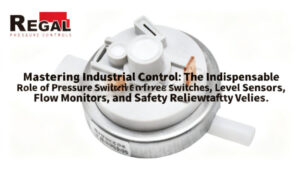
Pressure switches are fundamental control devices engineered to respond to changes in fluid or gas pressure. By actuating an electrical contact when a preset pressure threshold is reached, they serve as crucial sentinels, triggering alarms, starting/stopping pumps, or initiating other control actions. Their applications are vast and varied:
- سوئیچهای فشار هوا: Widely used in HVAC systems to monitor duct pressure, in pneumatic circuits for compressor control, and in industrial ovens to detect fan failures. They ensure optimal air distribution and prevent equipment damage from over/under-pressure conditions.
- سوئیچهای فشار آب: Indispensable in pumping systems for maintaining consistent water supply, irrigation systems, and boiler controls. They prevent dry-running of pumps, protect against pipe bursts, and ensure efficient water management.
The reliability of a pressure switch hinges on its accuracy, repeatability, and durability, especially in harsh industrial environments. Whether diaphragm, piston, or bellows types, selecting the right switch with appropriate set points and hysteresis is vital for sustained operational excellence.
Water Level Control: Preventing Catastrophes, Ensuring Efficiency
Managing fluid levels in tanks, sumps, and vessels is critical for preventing spills, optimizing resource usage, and safeguarding equipment. Both water level switches and water level sensors play distinct yet complementary roles:
- سوئیچهای سطح آب: These ‘on/off’ devices detect when a liquid reaches a specific high or low point. Common types include float switches, which physically rise or fall with the liquid, and conductivity switches, which detect liquid presence between electrodes. They are ideal for simple pump control (e.g., emptying a sump, filling a tank) or high/low level alarms in wastewater treatment plants, cooling towers, and storage tanks. Their simplicity and robustness make them highly reliable for critical threshold detection.
- سنسورهای سطح آب: Offering continuous measurement, these sensors provide real-time data on fluid levels, allowing for more granular control and monitoring. Technologies range from ultrasonic sensors (non-contact, ideal for corrosive liquids), hydrostatic sensors (measuring pressure exerted by the liquid column), to radar and guided wave radar sensors (highly accurate for various liquid types and conditions). These sensors are crucial for inventory management, precise chemical dosing, boiler feedwater control, and preventing cavitation in pumps by ensuring adequate suction head. Their data output can be integrated into SCADA or DCS systems for comprehensive process oversight.
Effective water level control is not just about preventing overflows; it’s about optimizing processes, conserving resources, and ensuring environmental compliance.
Flow Sensors: The Pulse of Fluid Dynamics
Understanding and controlling the movement of fluids and gases is fundamental to countless industrial processes. Flow sensors (or flow meters) measure the rate at which a fluid passes through a pipe or conduit, providing critical data for process optimization, quality control, and resource allocation.
A diverse array of technologies exists to meet specific application needs:
- Mechanical Flow Sensors: Include paddle wheel, turbine, and positive displacement meters, which rely on the fluid’s kinetic energy to drive a rotor. They are cost-effective and suitable for clean liquids in applications like irrigation, cooling systems, and batching.
- Non-Invasive Flow Sensors: Ultrasonic flow meters, for instance, measure flow by transmitting sound waves through the pipe wall, making them ideal for corrosive, abrasive, or hygienic liquids as they do not contact the fluid.
- Electromagnetic Flow Sensors (Magmeters): Employ Faraday’s law of induction to measure the velocity of conductive liquids. With no moving parts and minimal pressure drop, they are excellent for wastewater, slurries, and chemical processes.
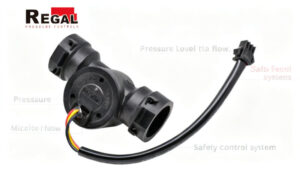
- سنسورهای جریان جرمی حرارتی: Measure the heat transfer from a heated element to the flowing fluid, making them highly accurate for low flow rates of gases and clean liquids.
Accurate flow measurement is vital for ensuring correct reactant ratios in chemical manufacturing, monitoring utility consumption, detecting leaks, and maintaining optimal performance in heat exchangers and ventilation systems. They directly impact product quality, operational efficiency, and cost management.
شیرهای اطمینان: آخرین خط دفاعی
While sensing and control components optimize daily operations, safety relief valves (SRVs) stand as the ultimate safeguard against catastrophic overpressure events. These mechanical devices are designed to automatically open and discharge excess pressure when it exceeds a predetermined set point, thereby protecting equipment, pipelines, and personnel from potentially explosive failures. They are non-negotiable in any system handling pressurized fluids or gases.
SRVs are critical in applications such as:
- Boilers and Pressure Vessels: Preventing rupture due to excessive steam or internal pressure.
- Pipelines and Storage Tanks: Protecting against thermal expansion or external fire scenarios.
- Chemical Reactors: Venting exothermic reaction pressures.
Adherence to industry standards (e.g., ASME Boiler and Pressure Vessel Code) for selection, sizing, installation, and regular testing of SRVs is not merely a recommendation but a legal and ethical imperative. Their proper functioning is literally a matter of life and death, making their quality and maintenance paramount.
The Ecosystem of Parts: Ensuring Longevity and Performance
Beyond the primary components, the overall reliability and longevity of any industrial system are heavily reliant on the quality of its auxiliary parts and accessories. This includes everything from connectors, fittings, and seals to calibration tools, mounting hardware, and replacement diaphragms. Opting for genuine or high-quality compatible parts ensures that the entire system operates as designed, reducing downtime, extending equipment life, and minimizing total cost of ownership. Investing in robust, well-engineered parts is an investment in the continuous, safe, and efficient operation of your industrial processes.
Conclusion: Building Resilient Industrial Futures
The interplay of pressure switches, water level sensors, flow sensors, and safety relief valves forms an intelligent network that drives modern industrial efficiency and safety. Each component, from the simplest switch to the most sophisticated sensor, plays a critical role in monitoring, controlling, and protecting complex systems. For any B2B enterprise aiming for operational excellence, investing in high-quality, reliable, and precisely engineered sensing and safety technologies is not just an operational choice—it’s a strategic imperative for building resilient, efficient, and safe industrial futures.