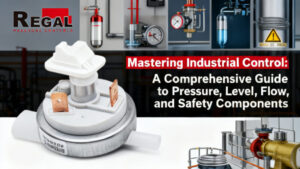
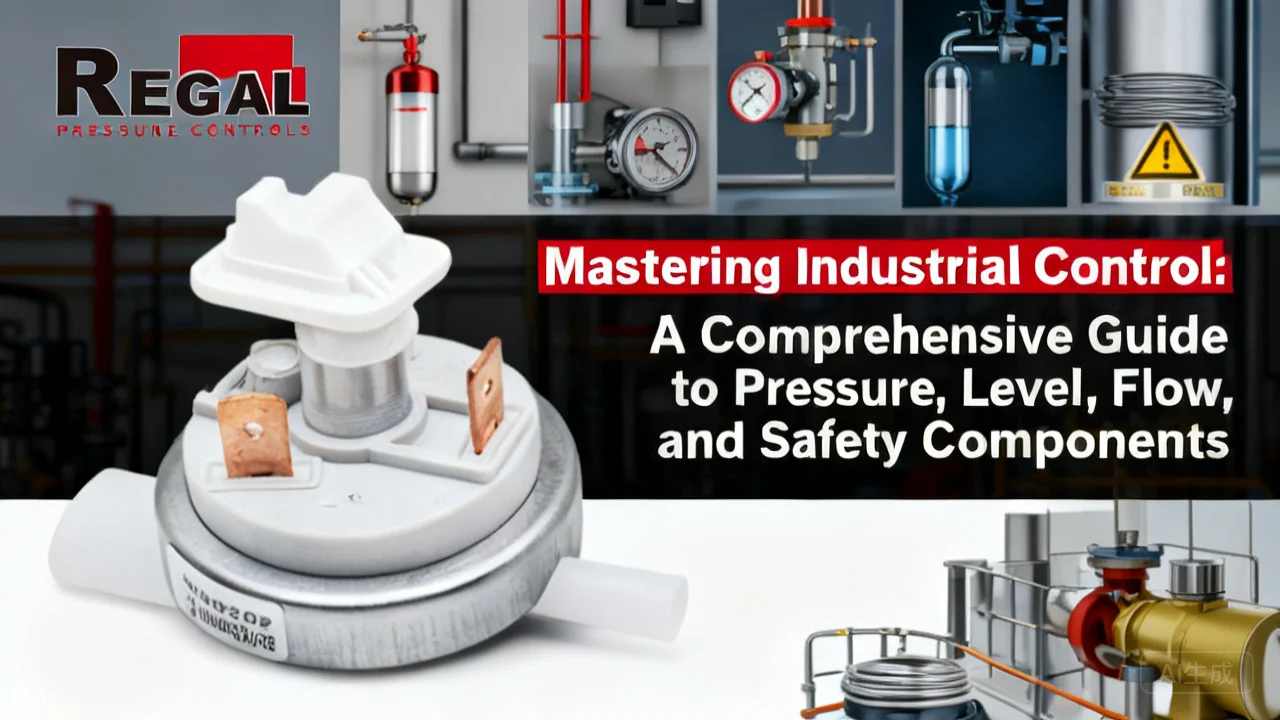
In the intricate world of industrial operations, precision, safety, and efficiency are paramount. Achieving these goals relies heavily on the intelligent deployment of a diverse array of control components. From regulating fluid dynamics to preventing catastrophic overpressure, devices like pressure switches, water level sensors, flow sensors, and safety relief valves form the backbone of reliable systems. Understanding their functions, applications, and selection criteria is crucial for any B2B professional aiming to optimize industrial processes.
Pressure switches are fundamental components designed to monitor and respond to changes in pressure within a system. They act as automated sentinels, triggering an electrical contact once a predefined pressure threshold is met or exceeded. This simple yet critical function makes them indispensable across countless applications.
Air Pressure Switches: Precision in Pneumatics and HVAC
Air pressure switches are commonly found in pneumatic systems, HVAC units, air compressors, and vacuum systems. They ensure equipment operates within safe and efficient pressure ranges. For instance, in an air compressor, an air pressure switch might turn the motor off when the tank reaches maximum pressure and restart it when the pressure drops below a minimum threshold. Key considerations for selecting an air pressure switch include:
- Set Point and Hysteresis: The exact pressure at which the switch actuates and de-actuates.
- 圧力範囲: The operating limits the switch can handle.
- メディア互換性: Ensuring the materials are suitable for air or other specific gases.
- 環境条件: Temperature, humidity, and vibration tolerance.
Water Pressure Switches: Controlling Liquid Dynamics
Similar in principle but designed for liquid applications, water pressure switches are vital in pump control, irrigation systems, water treatment plants, and industrial cooling systems. They protect pumps from dry running, maintain consistent water pressure in plumbing systems, and can initiate alarms for pressure drops or surges. When selecting a water pressure switch, pay attention to:
- Material Construction: Often brass, stainless steel, or engineered plastics to resist corrosion.
- Pressure Rating: Must match or exceed the maximum system pressure.
- Seal Type: Ensuring a leak-proof connection for liquid media.
Eyes on the Tank: Water Level Switches and Sensors
Accurate level monitoring is essential for preventing overflows, protecting pumps, managing inventory, and ensuring process consistency. Water level switches and sensors provide real-time data or trigger actions based on liquid levels in tanks, sumps, or vessels.
Water Level Switches: Simple, Reliable Actuation
These devices typically use a float mechanism to open or close an electrical circuit when the water level reaches a specific point. They are robust, cost-effective, and widely used for basic high/low level alarms, pump control (e.g., emptying a sump or filling a tank), and protection against dry running. Their simplicity makes them highly reliable in many industrial settings.
Water Level Sensors: Continuous Monitoring and Precision
For applications requiring more granular data, water level sensors offer continuous measurement. Technologies include:
- 超音波センサー: Non-contact, ideal for corrosive liquids or those with suspended solids.
- 静水圧センサー: Measure the pressure exerted by the liquid column, providing highly accurate readings regardless of tank shape.
- Capacitive Sensors: Detect changes in capacitance as the liquid level changes, suitable for various liquid types.
- Conductive Sensors: Utilize probes that detect conductivity to determine liquid presence at specific points.
Choosing the right sensor depends on the required accuracy, the liquid’s properties, tank geometry, and environmental conditions.
Measuring the Flow: Flow Sensors
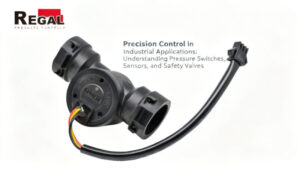
Flow sensors are critical for monitoring the movement of liquids or gases through pipes, enabling process control, leak detection, and accurate resource management. They provide data on flow rate, totalized flow, and can trigger alarms or control valves based on predefined parameters.
Applications and Types
Common applications include HVAC systems, chemical dosing, water treatment, irrigation, and industrial cooling. Different types of flow sensors are suited for various applications:
- パドルホイールセンサー: Cost-effective for clean liquids, measure flow based on rotation.
- Thermal Dispersion Sensors: Excellent for low flow rates and gas applications.
- Electromagnetic Flowmeters: Ideal for conductive liquids, offering high accuracy with no moving parts.
- Ultrasonic Flowmeters: Non-invasive, suitable for a wide range of liquids, often used for large pipes.
Proper selection involves considering fluid type, pipe size, desired accuracy, pressure drop tolerance, and budget.
The Ultimate Safety Net: Safety Relief Valves
Perhaps the most critical components in terms of personnel and asset safety, safety relief valves (SRVs) are designed to automatically open and discharge fluid when the system pressure exceeds a predetermined set point. They are the last line of defense against overpressure conditions that could lead to equipment damage, leaks, or catastrophic failures.
Why SRVs are Non-Negotiable
SRVs are mandatory in systems containing pressure vessels, boilers, pipelines, and any equipment where internal pressure could build to dangerous levels. They protect against:
- Overheating (e.g., in boilers)
- External fire exposure
- Process upsets or control system failures
- Thermal expansion in liquid-filled systems
- Chemical reactions that generate pressure
The selection, sizing, installation, and regular maintenance of safety relief valves must adhere to stringent industry standards and regulations (e.g., ASME codes) to ensure their reliable operation when needed most. Material compatibility with the process fluid and environmental conditions is also paramount.
The Importance of Quality Parts
The reliability and longevity of any industrial control system are only as good as the sum of its parts. Utilizing high-quality components, whether they are the main switches, sensors, valves, or the seemingly minor ‘parts’ like seals, gaskets, and connectors, is non-negotiable. Substandard components can lead to:
- Premature failure and downtime.
- Inaccurate readings, leading to inefficient processes.
- Compromised safety, especially with SRVs.
- Increased maintenance costs and operational headaches.
Investing in reputable brands and ensuring proper specification for each application will yield significant returns in terms of system reliability, safety, and overall operational efficiency.
In conclusion, the sophisticated interplay of pressure switches, level sensors, flow sensors, and safety relief valves forms the bedrock of modern industrial automation and safety. A deep understanding of these components, coupled with meticulous selection and maintenance practices, empowers businesses to build robust, efficient, and ultimately safer operational environments. By prioritizing quality and informed decision-making, industries can harness the full potential of these critical control elements.