In the complex world of industrial automation and process control, the reliability and accuracy of fundamental components are paramount. From ensuring operational efficiency to safeguarding personnel and equipment, devices like pressure switches, water level sensors, flow sensors, and safety relief valves are not mere accessories but critical enablers. This article delves into the essential functions, diverse applications, and critical considerations for selecting and maintaining these vital instruments.
Pressure Switches: The Sentinels of System Integrity
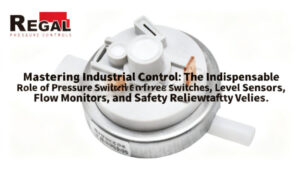
Pressure switches are electromechanical devices designed to monitor and respond to changes in fluid or gas pressure within a system. When the pressure reaches a predetermined set point, the switch activates or deactivates an electrical contact, triggering an alarm, shutting down a pump, or initiating another control action. Their simplicity belies their critical role in countless applications:
- 空気圧スイッチ: Widely used in HVAC systems, pneumatic control, air compressors, and vacuum systems. They ensure proper air flow, prevent motor overload, and maintain desired pressure levels for optimal operation.
- 水圧スイッチ: Essential in pump control for water supply systems, irrigation, fire suppression, and industrial cooling. They automatically start and stop pumps to maintain a consistent water pressure, preventing dry running or over-pressurization.
- Industrial Applications: Beyond air and water, pressure switches are crucial in hydraulic systems, chemical processing, and manufacturing, monitoring everything from steam lines to lubrication systems.
Key considerations for selection include the operating pressure range, media compatibility, hysteresis (the difference between the cut-in and cut-out pressure), contact configuration (NO/NC), and environmental ratings.
Water Level Control: Precision in Fluid Management
Managing fluid levels is critical across industries, from municipal water treatment to chemical manufacturing. Two primary categories of devices facilitate this:
- 水位スイッチ: These provide discrete ON/OFF signals when a specific liquid level is reached. Common types include float switches (mechanical buoyancy), conductive probes (detecting liquid presence between electrodes), and optical switches. They are ideal for high/low level alarms, pump control (e.g., emptying sumps or filling tanks), and overflow prevention.
- 水位センサー: Offering continuous measurement, these devices provide an analog output (e.g., 4-20mA or 0-10V) proportional to the liquid level. Technologies include ultrasonic (non-contact), hydrostatic (measuring pressure exerted by the liquid column), radar, and guided wave radar. These sensors are vital for inventory management, process control requiring precise level monitoring, and sophisticated automation systems.
Choosing between a switch and a sensor depends on whether a simple threshold detection or continuous measurement is required. Factors like tank geometry, liquid properties (viscosity, corrosivity, conductivity), temperature, and accuracy requirements guide the selection process.
Flow Sensors: Guardians of Throughput and Efficiency
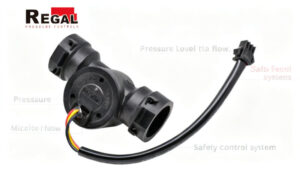
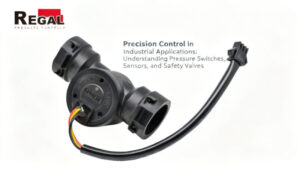
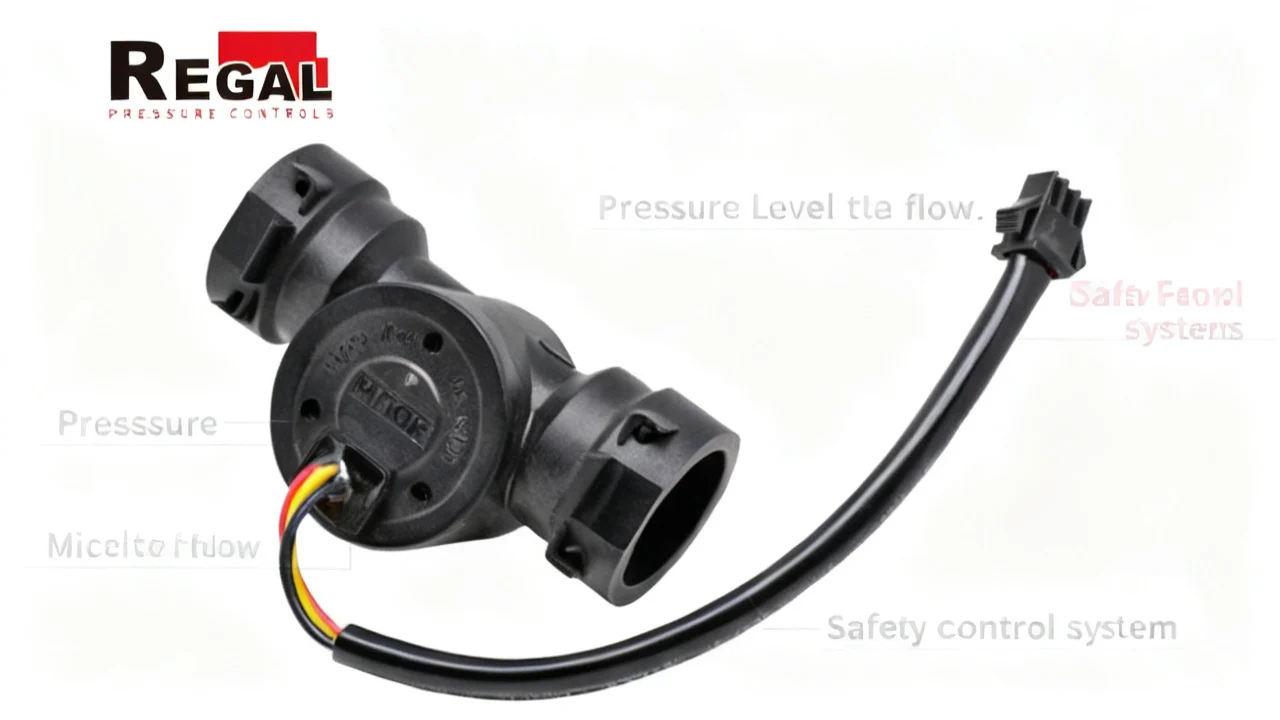
Flow sensors, or flow meters, measure the rate of fluid or gas movement through a pipe or conduit. Accurate flow measurement is indispensable for process control, dosing, billing, and ensuring system efficiency.
- 種類と用途:
- パドルホイールセンサー: Cost-effective for water and low-viscosity liquids, often used in irrigation and cooling systems.
- Turbine Flowmeters: Provide high accuracy for clean liquids and gases, common in fuel monitoring and chemical processing.
- Electromagnetic Flowmeters: Ideal for conductive liquids, slurries, and corrosive fluids, frequently found in water/wastewater treatment.
- Thermal Mass Flowmeters: Excellent for gas flow measurement, especially in HVAC, combustion control, and industrial gas applications.
- Differential Pressure Flowmeters: Utilize orifice plates or venturi tubes to create a pressure drop, suitable for various fluids.
Selecting a flow sensor involves considering the fluid type, flow range, required accuracy, pressure and temperature limits, and the presence of solids or corrosive elements.
安全弁:究極の安全対策
While control systems aim for optimal operation, unforeseen events can lead to dangerous over-pressurization. Safety Relief Valves (SRVs) are mechanical devices designed as the last line of defense to automatically vent excess pressure from a system, preventing catastrophic equipment failure, explosions, and injuries.
- How They Work: An SRV is engineered to open at a predetermined set pressure, relieving the accumulated pressure until it drops to a safe level, then re-seats to prevent further loss of process fluid.
- Critical Role: They are mandated in countless industries, including oil and gas, chemical processing, power generation, and boiler systems, to comply with stringent safety regulations and protect pressure vessels, pipelines, and storage tanks.
- Types: Common types include conventional spring-loaded, balanced bellows (for applications with back pressure), and pilot-operated (for precise control and high capacity).
Proper sizing, selection based on media, temperature, pressure, and adherence to industry standards (e.g., ASME codes) are paramount for SRVs. Regular inspection, testing, and maintenance are not just good practice but often regulatory requirements.
The Importance of Quality Parts and Maintenance
The performance and longevity of any industrial system are directly tied to the quality of its components and the rigor of its maintenance program. Using high-quality parts, whether it’s a replacement diaphragm for a pressure switch or a sensor module for a water level device, ensures accuracy, reliability, and extended service life. Regular calibration, inspection for wear and tear, and timely replacement of worn parts are crucial for:
- Preventing Downtime: Proactive maintenance reduces the risk of unexpected failures.
- Ensuring Safety: Especially for SRVs, regular checks are non-negotiable for personnel and asset protection.
- Maintaining Efficiency: Calibrated sensors and switches ensure processes run at optimal parameters, reducing waste and energy consumption.
- Compliance: Many industries have strict regulatory requirements for the maintenance and calibration of safety-critical instruments.
結論
Pressure switches, water level switches and sensors, flow sensors, and safety relief valves are foundational elements in modern industrial landscapes. Their precise operation enables efficient processes, conserves resources, and, most importantly, protects lives and investments. Understanding their functions, selecting the appropriate devices for specific applications, and committing to rigorous maintenance are not just best practices but essential strategies for any organization striving for operational excellence, safety, and sustainability.