In the complex world of industrial operations, precision, safety, and efficiency are paramount. Achieving these goals often hinges on the reliable performance of critical control components. From managing fluid dynamics to safeguarding against hazardous conditions, an array of specialized devices works tirelessly behind the scenes. This article delves into the essential roles of pressure switches, water level switches and sensors, flow sensors, and safety relief valves, highlighting their significance in maintaining robust and secure industrial systems.
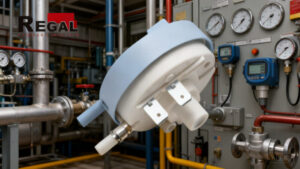
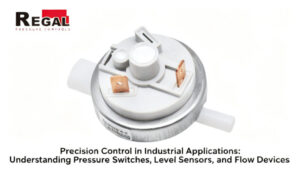
Pressure switches are fundamental control devices designed to monitor and respond to changes in fluid or gas pressure within a system. They act as crucial sentinels, triggering an electrical contact (opening or closing) when a predetermined pressure threshold is reached. This action can initiate or halt a process, sound an alarm, or activate another protective mechanism.
공기압 스위치
Commonly found in HVAC systems, pneumatic equipment, and air compressors, air pressure switches ensure optimal operating conditions and prevent damage. For instance, in a compressor, an air pressure switch might turn off the motor once the tank reaches its maximum pressure and restart it when the pressure drops below a minimum set point. Their reliability is key to maintaining consistent air supply and preventing over-pressurization.
수압 스위치
Water pressure switches are indispensable in water pumping systems, irrigation networks, and water treatment plants. They regulate pump operation to maintain desired water pressure, preventing dry running or excessive pressure buildup. In residential or industrial water booster systems, they ensure a steady supply, activating pumps only when demand dictates, thereby conserving energy and extending pump life. When selecting a water pressure switch, considerations include the desired set point, hysteresis (the difference between the cut-in and cut-out pressure), media compatibility, and material construction to withstand corrosive environments.
Water Level Control: Ensuring Optimal Fluid Management
Managing fluid levels accurately is vital in numerous industrial applications, from chemical processing to wastewater treatment. Water level switches and sensors provide the necessary intelligence to prevent overflows, dry run conditions, and maintain precise inventory levels.
수위 스위치
These devices offer simple, reliable on/off control based on a predefined liquid level. Float switches are a common type, mechanically activating a switch as a float rises or falls with the liquid. They are ideal for applications like controlling pump operation in sumps, tanks, or wells, ensuring a minimum level is maintained or preventing a maximum level from being exceeded. Their robust design and straightforward operation make them a go-to solution for basic level control.
수위 센서
For applications requiring continuous monitoring and more precise level measurement, water level sensors are employed. Technologies include ultrasonic sensors (non-contact, measuring time-of-flight of sound waves), hydrostatic sensors (measuring pressure exerted by the liquid column), and capacitive sensors. These sensors provide an analog output signal proportional to the liquid level, allowing for sophisticated process control, inventory management, and data logging. They are critical in boilers, chemical storage tanks, and large-scale water reservoirs where exact level data is crucial for operational efficiency and safety.
Flow Sensors: Monitoring the Pulse of Your Process
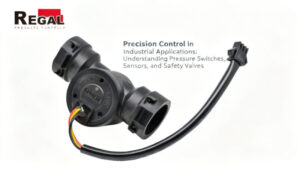
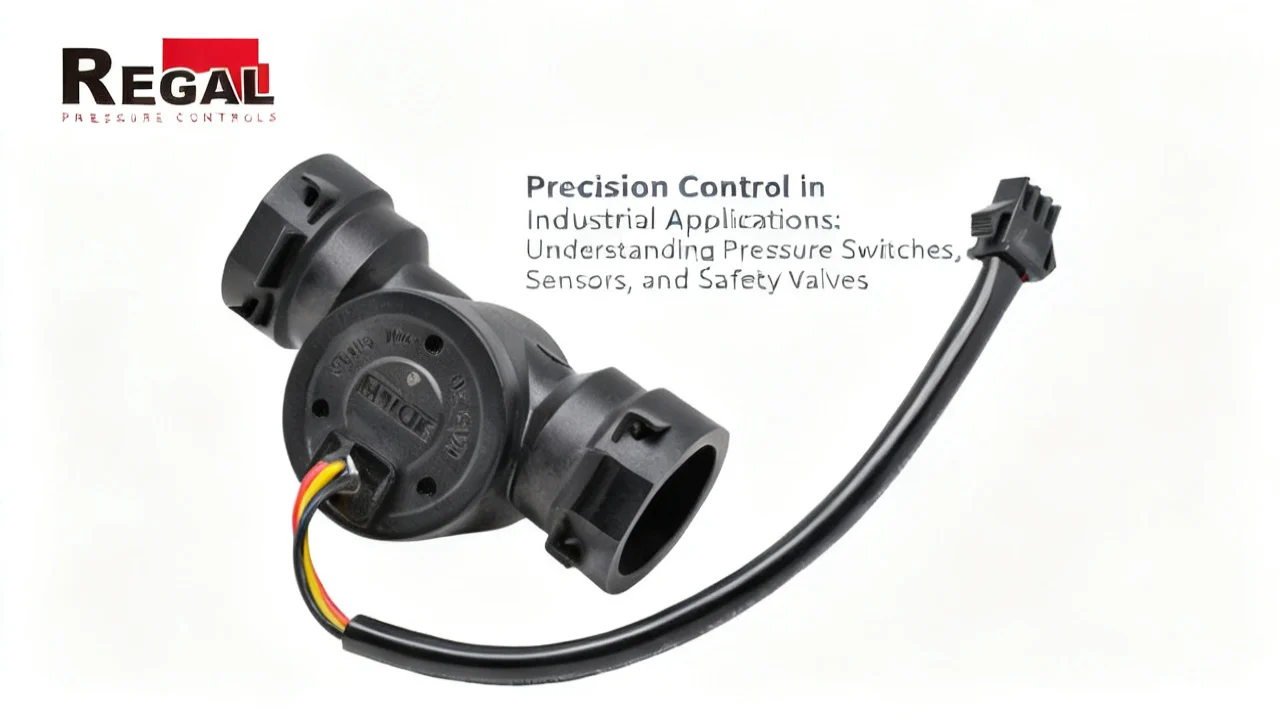
Flow sensors are instrumental in monitoring the movement of liquids or gases through pipelines. They detect the presence or absence of flow and, in many cases, measure the actual flow rate, providing critical data for process control, efficiency optimization, and safety.
Different types of flow sensors cater to various applications: paddle wheel sensors for basic flow detection, turbine flowmeters for higher accuracy, electromagnetic flowmeters for conductive liquids, and ultrasonic flowmeters for non-invasive measurement. In chemical dosing systems, flow sensors ensure the correct amount of reagent is added. In cooling systems, they confirm adequate coolant circulation. Their ability to provide real-time flow data is invaluable for leak detection, ensuring process integrity, and optimizing resource consumption.
안전 릴리프 밸브: 최후의 방어선
In any pressurized system, the risk of overpressure due to equipment malfunction, power failure, or process upset is a constant concern. Safety relief valves (SRVs) are indispensable safety devices designed to automatically open and discharge excess pressure, then re-close once normal conditions are restored. They are the ultimate safeguard against catastrophic equipment failure, system damage, and, most importantly, danger to personnel.
SRVs are mandated by various industry standards and regulations because of their critical role. They operate on a simple principle: a spring-loaded disc or piston holds against the system pressure. When the system pressure exceeds the set point of the valve, the spring force is overcome, and the valve opens rapidly, venting the excess fluid or gas. Selecting the correct safety relief valve involves careful consideration of the set pressure, flow capacity, fluid properties, operating temperature, and material compatibility to ensure it can effectively protect the system under worst-case scenarios. Regular inspection and maintenance are crucial to ensure their readiness to perform when needed.
The Role of Quality Parts and Preventative Maintenance
The reliability and longevity of any industrial system are only as good as the components within it. Opting for high-quality, genuine parts for pressure switches, level sensors, flow sensors, and safety relief valves is not merely a matter of compliance but a critical investment in operational continuity and safety. Substandard parts can lead to premature failure, inaccurate readings, and compromised safety mechanisms, resulting in costly downtime, production losses, and potential hazards.
Furthermore, a robust preventative maintenance program is essential. Regular calibration of sensors, testing of switches, and inspection of safety relief valves ensure they operate within specified parameters. This proactive approach helps identify potential issues before they escalate, extending the lifespan of equipment, optimizing performance, and upholding the highest safety standards across all industrial applications.
결론
The seemingly small components discussed—pressure switches, level sensors, flow sensors, and safety relief valves—collectively form the backbone of modern industrial control and safety systems. Their precise operation, robust design, and reliable performance are instrumental in ensuring efficiency, preventing costly failures, and protecting personnel. Understanding their functions, selecting the right types for specific applications, and committing to quality parts and diligent maintenance are not just best practices; they are foundational pillars for any successful and safe industrial operation.