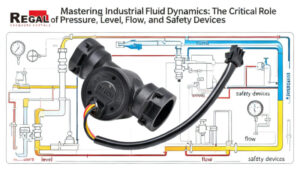
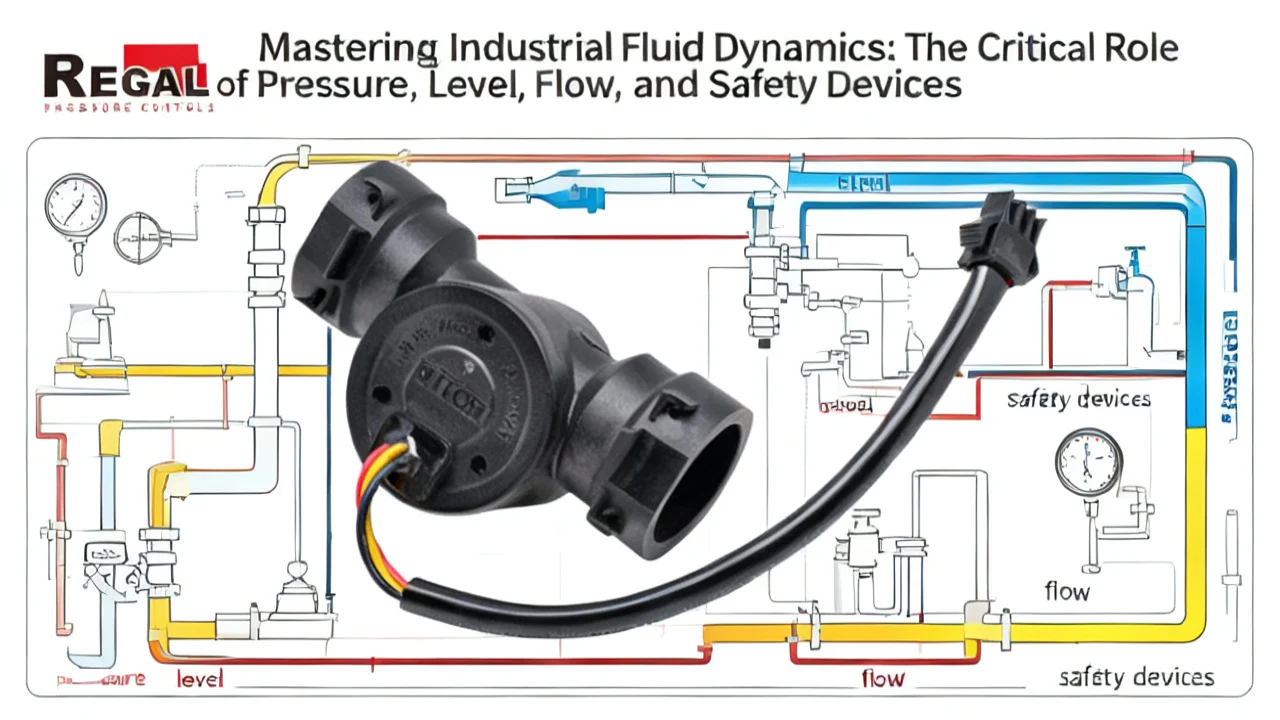
In the complex world of industrial operations, the precise control and monitoring of fluid dynamics are paramount. From ensuring operational efficiency to safeguarding personnel and equipment, a suite of specialized devices works tirelessly behind the scenes. This article delves into the indispensable roles of pressure switches, water level switches and sensors, flow sensors, and safety relief valves – essential components that form the backbone of reliable and safe industrial systems.
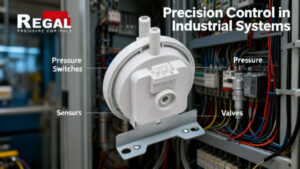
Pressure switches are fundamental control devices designed to monitor and respond to changes in fluid pressure. They act as guardians, triggering an electrical contact when a predefined pressure threshold is reached, thereby initiating or halting a process, or activating an alarm. Their application spans virtually every industry where fluid or gas pressure is a factor.
공기압 스위치
- Function: Primarily used in pneumatic systems, HVAC, and industrial air compressors. They ensure that air pressure remains within safe and operational limits.
- 응용 분야: Monitoring air filters for clogging, controlling fan speeds, activating warning systems in ventilation ducts, and managing compressor cycles.
- Key Features: Often feature adjustable set points and differential pressure capabilities, crucial for precise control in sensitive air-driven processes.
수압 스위치
- Function: Essential for water pumps, irrigation systems, and industrial water lines. They protect pumps from dry running and maintain consistent water pressure for various applications.
- 응용 분야: Regulating pressure in domestic and industrial water supply systems, controlling booster pumps, and activating fire suppression systems.
- Importance: Prevents equipment damage, conserves energy by cycling pumps efficiently, and ensures reliable water delivery.
Both air and water pressure switches come in various designs, including diaphragm, piston, and Bourdon tube types, each suited for different pressure ranges and media compatibility.
Guarding the Volume: Water Level Switches and Sensors
Managing liquid levels in tanks, reservoirs, and process vessels is critical for preventing overflows, ensuring adequate supply, and protecting pumps from cavitation. Water level switches and sensors provide the necessary intelligence to achieve this.
수위 스위치
These devices provide a discrete output (on/off) when a specific liquid level is reached. They are ideal for simple control tasks.
- Types: Common types include float switches (mechanical buoyancy), conductive switches (detecting electrical conductivity between probes), and optical switches (sensing presence/absence of liquid via light refraction).
- 응용 분야: Activating or deactivating pumps to maintain levels in sumps or storage tanks, high/low level alarms, and controlling filling/draining operations.
수위 센서
Unlike switches, sensors provide continuous measurement of liquid levels, offering more granular data for complex control systems and monitoring. This continuous feedback allows for precise regulation and predictive maintenance.
- Types: Ultrasonic sensors (emitting sound waves and measuring echo time), radar sensors (using radio waves), hydrostatic pressure sensors (measuring pressure exerted by the liquid column), and capacitive sensors (detecting changes in capacitance due to liquid presence).
- 응용 분야: Continuous monitoring of chemical tank levels, fuel storage, wastewater treatment facilities, and process control where exact volume is critical.
Measuring the Motion: Flow Sensors
Flow sensors are indispensable for quantifying the movement of fluids (liquids or gases) through a pipe or conduit. Accurate flow measurement is vital for process control, dosing, billing, and ensuring product quality.
- Importance: Enables precise ingredient mixing, optimizes irrigation schedules, monitors cooling system performance, and detects leaks or blockages.
- 종류 및 용도:
- Paddle Wheel Sensors: Cost-effective for water and low-viscosity fluids, often used in HVAC and irrigation.
- Turbine Flowmeters: High accuracy for clean liquids and gases, common in chemical processing and fuel measurement.
- Magnetic (Magmeter) Flowmeters: Ideal for conductive liquids, slurries, and wastewater, as they have no moving parts and minimal pressure drop.
- Vortex Flowmeters: Suitable for steam, gas, and liquids, leveraging the Karman vortex street principle.
- Ultrasonic Flowmeters: Non-invasive, often clamped onto the outside of pipes, excellent for corrosive or high-purity fluids.
Selecting the right flow sensor depends on factors like fluid type, viscosity, temperature, pressure, pipe size, and desired accuracy.
The Last Line of Defense: Safety Relief Valves
While control devices ensure efficient operation, safety relief valves are the ultimate guardians against catastrophic failure due to overpressure. They are passive mechanical devices designed to automatically release excess pressure from a system, preventing explosions, equipment damage, and serious injury to personnel.
- Function: When system pressure exceeds a predetermined set point, the valve opens rapidly to discharge the fluid (liquid or gas) until the pressure returns to a safe level, then reseals.
- Criticality: Mandated by safety regulations and industry standards (e.g., ASME Boiler and Pressure Vessel Code) for virtually all pressure vessels, boilers, pipelines, and pressurized systems.
- 응용 분야: Found in power generation, oil and gas, chemical processing, pharmaceutical manufacturing, and even commercial HVAC systems.
- Types: Range from conventional spring-loaded relief valves to pilot-operated relief valves, each offering specific advantages based on system characteristics and fluid properties.
The correct selection, sizing, installation, and regular maintenance of safety relief valves are non-negotiable for ensuring industrial safety and compliance.
The Synergy of Systems and the Value of Quality Parts
Each of these devices – pressure switches, level sensors, flow sensors, and safety relief valves – plays a distinct yet interconnected role in creating robust, efficient, and safe industrial processes. A water pump system, for example, might utilize a water pressure switch to regulate its operation, a water level sensor to protect it from dry running, and a flow sensor to monitor its output, all while a safety relief valve stands ready to protect the entire system from unexpected pressure surges.
The performance and longevity of these critical instruments are directly tied to the quality of their original components and replacement parts. Opting for genuine, high-quality parts ensures reliability, accuracy, and adherence to performance specifications, minimizing downtime and maximizing operational integrity. Investing in superior parts is not just about maintenance; it’s about safeguarding your entire operation.
결론
From the precise control offered by pressure and level switches to the insightful data provided by flow sensors, and the indispensable protection of safety relief valves, these instruments are the unsung heroes of industrial automation and safety. Understanding their functions, applications, and the importance of quality components is crucial for any organization striving for operational excellence, regulatory compliance, and a secure working environment. By leveraging these technologies effectively, industries can achieve unparalleled control, efficiency, and peace of mind.