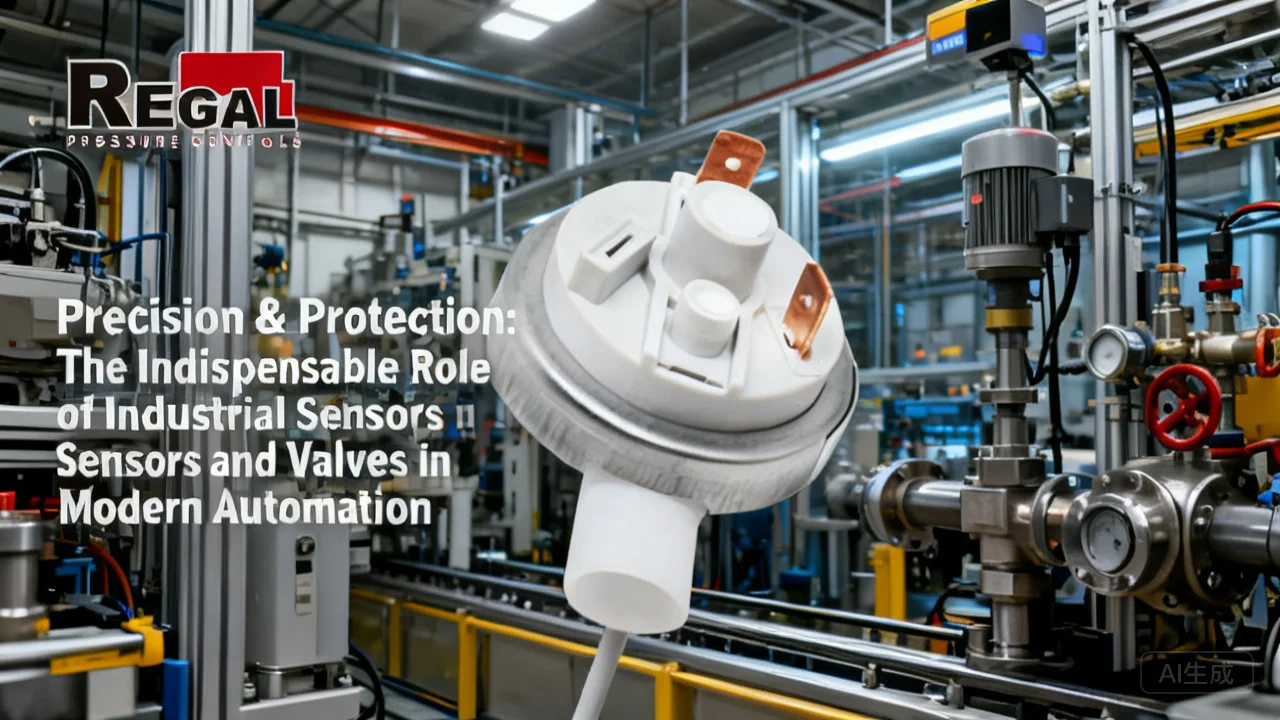
In the intricate world of industrial automation, the seamless operation of processes hinges on the precise monitoring and control of various physical parameters. From maintaining optimal pressure in a pneumatic system to ensuring safe liquid levels in a storage tank, the reliability of a facility’s operations, its efficiency, and most critically, its safety, are directly tied to the performance of its sensing and control components. This article delves into the critical functions of pressure switches, water level switches and sensors, flow sensors, and safety relief valves, highlighting their collective importance in today’s demanding industrial landscapes.
The Foundation of Control: Pressure Switches
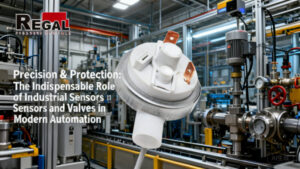
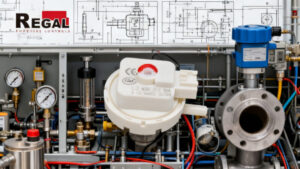
Pressure switches are fundamental components in countless industrial applications, acting as an electrical switch that operates when a certain pressure threshold is reached. Their ability to translate a physical pressure state into an electrical signal makes them invaluable for automation and safety interlocks.
Interruptores de presión de aire
Air pressure switches are ubiquitous in systems utilizing compressed air, such as HVAC systems, pneumatic machinery, and industrial compressors. They monitor the air pressure within a system and can trigger an action—like starting or stopping a pump, activating an alarm, or shutting down a system—when pressure deviates from a set point. For instance, in an air compressor, an air pressure switch ensures the compressor only runs when tank pressure drops below a minimum, conserving energy and preventing over-pressurization. In HVAC, they often monitor filter status or fan operation, safeguarding equipment and ensuring air quality.
Interruptores de presión de agua
Similarly, water pressure switches are vital for managing liquid systems. They are commonly found in water pumps, irrigation systems, and industrial water treatment plants. By detecting changes in water pressure, these switches can automate pump operations, protect against dry running, or signal leaks. For example, a water pressure switch on a well pump will activate the pump when household water pressure drops and deactivate it once the desired pressure is restored, ensuring a consistent supply without unnecessary pump wear.
Mastering Liquid Dynamics: Water Level Switches and Sensors
Managing liquid levels is paramount in many industries, from chemical processing and wastewater treatment to food and beverage production. Water level switches and water level sensors provide the necessary intelligence to prevent overflows, protect pumps, and maintain process integrity.
Interruptores de nivel de agua
Water level switches are simple, robust devices designed to detect when a liquid reaches a predetermined high or low level. These are typically ‘on/off’ devices, often utilizing float mechanisms, conductivity probes, or optical principles. They are excellent for basic control functions, such as starting a pump to empty a tank when it’s full, or stopping a pump to prevent it from dry running when a tank is empty. Their reliability and simplicity make them a go-to for alarm systems and basic automation tasks in sumps, reservoirs, and process tanks.
Sensores de nivel de agua
For more sophisticated applications requiring continuous monitoring and precise measurement, water level sensors are employed. These devices provide an analog or digital output proportional to the liquid level, allowing for real-time data acquisition and fine-tuned control. Technologies range from ultrasonic sensors that use sound waves to measure distance to the liquid surface, to hydrostatic pressure sensors that measure the pressure exerted by the liquid column, and capacitive sensors that detect changes in capacitance due to liquid presence. These sensors are critical in inventory management, precise dosing, and complex process control where exact liquid volumes need to be known at all times.
The Pulse of Production: Flow Sensors
Understanding and controlling the flow rate of liquids and gases is fundamental to optimizing efficiency and quality in numerous industrial processes. Flow sensors are the eyes and ears of these systems, providing crucial data on how much material is moving through a pipe or channel.
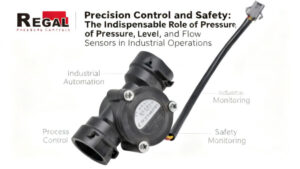
Flow sensors measure the volumetric or mass flow rate of a fluid, enabling operators to monitor consumption, ensure proper mixing ratios, and detect process anomalies. Applications span across HVAC systems for air and water flow, chemical processing for reagent dosing, water management for distribution and billing, and oil and gas for pipeline monitoring. Different types of flow sensors—such as paddle wheel, magnetic, thermal, ultrasonic, and Coriolis flowmeters—are selected based on fluid properties, accuracy requirements, and operating conditions. Accurate flow measurement is vital for cost control, product consistency, and preventing catastrophic failures due to insufficient or excessive material transport.
The Last Line of Defense: Safety Relief Valves
While sensors and control systems aim for precision and efficiency, no industrial process is entirely immune to unforeseen circumstances. This is where safety relief valves (SRVs) come into play—as the ultimate safeguard against overpressure conditions that could lead to equipment damage, environmental contamination, or severe injury to personnel.
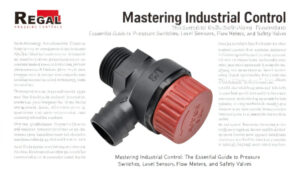
A safety relief valve is an automatic pressure-relieving device actuated by the static pressure upstream of the valve and designed to open proportionally to the increase in pressure over the opening pressure. When system pressure exceeds a predetermined safe limit, the SRV automatically opens to discharge excess fluid (liquid or gas), thus protecting pressure vessels, boilers, pipelines, and other equipment from rupture. Once the pressure returns to a safe level, the valve re-closes. Their robust design and fail-safe operation are non-negotiable in high-pressure environments like power plants, refineries, and chemical processing facilities, making them a critical component for regulatory compliance and operational safety.
The Synergy of Quality Parts
The performance and longevity of all these critical devices—pressure switches, level switches, level sensors, flow sensors, and safety relief valves—are intrinsically linked to the quality of their individual components and the overall system integration. From the diaphragm in a pressure switch to the spring in a safety relief valve, every ‘Part’ plays a vital role. Sourcing high-quality, durable, and precisely manufactured parts is not merely a matter of maintenance; it is an investment in the reliability, accuracy, and safety of the entire industrial operation. Regular inspection, calibration, and timely replacement with OEM-specified or equivalent quality parts ensure that these essential guardians of industrial processes continue to perform their duties flawlessly.
Conclusión
In the complex ecosystem of modern industry, pressure switches, water level switches and sensors, flow sensors, and safety relief valves are far more than mere components; they are the vigilant sentinels that ensure efficiency, optimize performance, and, most importantly, protect lives and assets. Their synergistic operation forms the backbone of reliable and safe industrial automation. Understanding their individual functions and appreciating their collective impact is crucial for any enterprise striving for operational excellence and robust safety protocols in an increasingly automated world.