In the complex tapestry of modern industrial operations, precision, reliability, and safety are not mere aspirations but fundamental requirements. Achieving these benchmarks hinges significantly on the performance of critical control components. From regulating fluid dynamics to safeguarding against hazardous conditions, devices like pressure switches, water level sensors, flow sensors, and safety relief valves are the unsung heroes that ensure seamless, efficient, and secure industrial processes. This article delves into the indispensable roles of these components, highlighting their functionalities, applications, and the factors crucial for their optimal selection and deployment.
The Foundation: Pressure Switches for Air and Water Systems
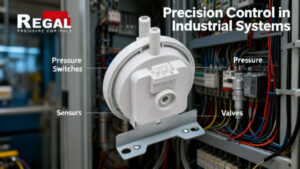
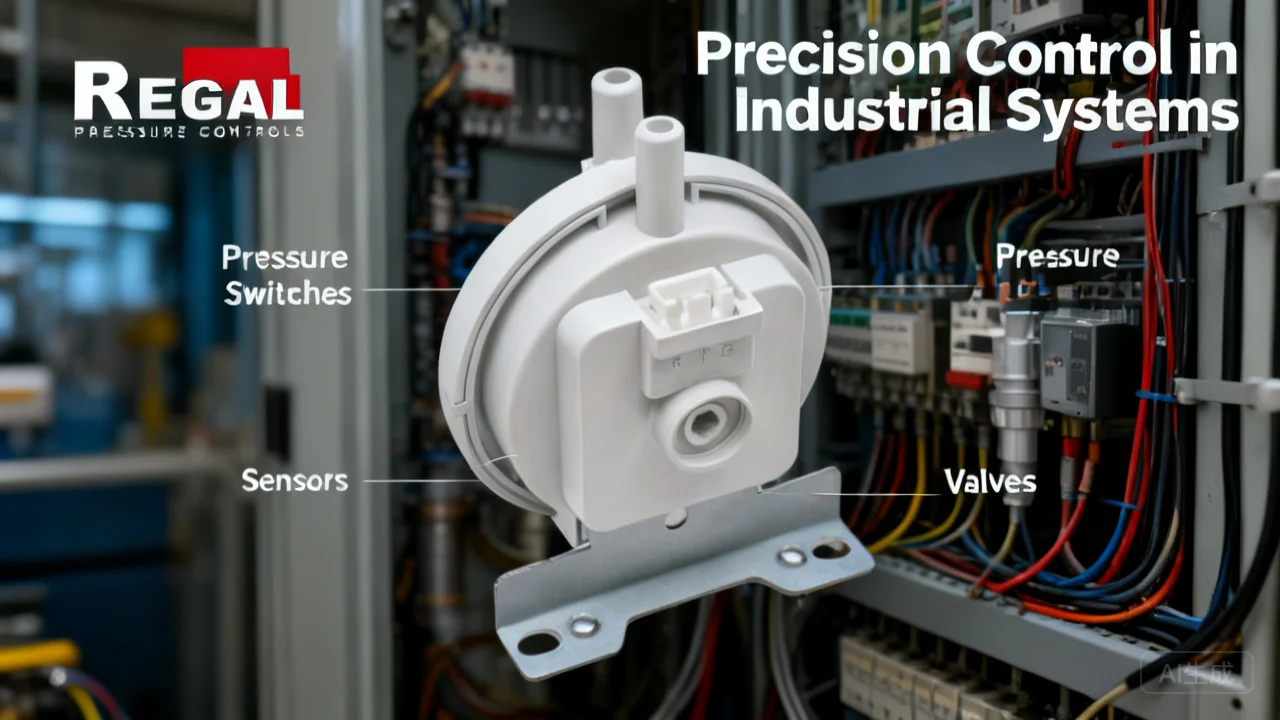
Pressure switches are electromechanical devices designed to monitor and respond to changes in pressure within a system. When the pressure reaches a predetermined set point, the switch actuates, either opening or closing an electrical circuit. Their simplicity, robustness, and reliability make them ubiquitous across various industries.
Interruptores de presión de aire
Air pressure switches are vital for systems utilizing compressed air, such as HVAC systems, pneumatic machinery, and air compressors. They ensure that air pressure remains within operational limits, preventing damage to equipment or maintaining process integrity. For instance, in a compressor, an air pressure switch might stop the motor once the tank reaches maximum pressure and restart it when the pressure drops below a minimum threshold.
Interruptores de presión de agua
Similarly, water pressure switches are indispensable in water management systems, including pumping stations, irrigation systems, and industrial cooling circuits. They protect pumps from dry-running, maintain constant water supply pressure, and can activate alarms in case of pressure anomalies. Their ability to handle various fluid types and environmental conditions makes them highly versatile.
Key Selection Considerations for Pressure Switches
- Set Point and Hysteresis: The exact pressure at which the switch actuates and the differential between activation and deactivation.
- Compatibilidad con medios: Ensuring the wetted parts are compatible with the fluid (air, water, chemicals).
- Rango de presión: The operational limits the switch is designed to handle.
- Clasificación eléctrica: Compatibility with the control system’s voltage and current.
- Enclosure Rating (IP/NEMA): Protection against dust, moisture, and hazardous environments.
Ensuring Fluid Management: Water Level Switches and Sensors
Accurate monitoring of liquid levels is paramount in many industrial processes to prevent overflows, ensure sufficient supply, or protect equipment. Water level switches and sensors provide this critical feedback, albeit with different levels of detail.
Interruptores de nivel de agua
These devices provide a simple ON/OFF signal when a specific liquid level is reached. Common types include float switches (mechanical buoyancy), conductive switches (electrical conductivity between probes), and optical switches. They are ideal for applications requiring basic level alarms, pump control (e.g., emptying a sump or filling a tank), or overflow prevention.
Sensores de nivel de agua
Unlike switches, water level sensors provide continuous measurement of liquid levels, offering more granular data for process control and monitoring. Technologies include ultrasonic (non-contact, measures time-of-flight of sound waves), hydrostatic (measures pressure exerted by the liquid column), and capacitive (measures changes in capacitance due to liquid presence). These sensors are crucial for applications demanding precise inventory management, continuous process feedback, or integration into advanced automation systems.
Monitoring Flow Dynamics: Flow Sensors
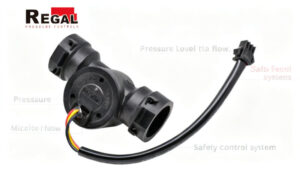
Understanding and controlling the flow of liquids or gases is essential for process efficiency, product quality, and safety. Flow sensors are designed to detect the presence, absence, or rate of flow within a pipeline or system.
Types and Applications
- Paddle Flow Switches: Simple, mechanical devices that detect flow by the movement of a paddle in the fluid stream. Often used for basic flow verification in cooling circuits or lubrication lines.
- Thermal Dispersion Flow Sensors: Utilize heat transfer principles to detect flow. Excellent for low flow rates and clean fluids, commonly found in HVAC systems or industrial chillers.
- Magnetic Flow Meters: Non-intrusive sensors ideal for conductive liquids, offering high accuracy for measuring volumetric flow rates. Widely used in water treatment, chemical processing, and food & beverage industries.
- Ultrasonic Flow Meters: Can be clamp-on (non-intrusive) or wetted, measuring flow by analyzing the effect of fluid movement on sound waves. Versatile for various fluid types and pipe sizes, often used for large pipeline monitoring.
Flow sensors play a critical role in ensuring adequate coolant flow, preventing pump cavitation, verifying chemical dosing, and optimizing energy consumption.
Safety First: Safety Relief Valves
No industrial system involving pressurized fluids or gases is complete without robust safety mechanisms. Safety relief valves (SRVs) are paramount among these, acting as the last line of defense against potentially catastrophic overpressure events.
Function and Importance
A safety relief valve is an automatic device that, upon reaching a preset pressure, rapidly discharges a quantity of fluid to prevent a further rise in pressure within a vessel or system. Unlike standard relief valves which might open proportionally, SRVs are designed for full, rapid opening to quickly reduce pressure to a safe level. They are mandated by regulatory bodies for use in boilers, pressure vessels, pipelines, and other systems where overpressure could lead to equipment failure, environmental damage, or severe injury.
Maintenance and Compliance
The reliability of SRVs is non-negotiable. Regular inspection, testing, and certification are crucial to ensure they will function correctly when called upon. Compliance with international standards (e.g., ASME, API) is essential for both design and maintenance, underscoring the critical role these components play in overall plant safety protocols.
The Importance of Quality Parts and Proactive Maintenance
The performance and longevity of any industrial system are only as good as its weakest link. Using high-quality, genuine parts for pressure switches, sensors, valves, and their associated components is not merely a recommendation but an operational imperative. Substandard parts can lead to frequent failures, inaccurate readings, increased downtime, and, most critically, compromise safety.
Proactive maintenance strategies, including regular calibration, inspection, and timely replacement of wear parts, are essential to maximize the lifespan and accuracy of these critical control elements. Investing in quality and maintenance translates directly into enhanced operational efficiency, reduced repair costs, and a safer working environment.
Selección de los componentes adecuados para su aplicación
Choosing the correct pressure switch, level sensor, flow sensor, or safety relief valve requires a thorough understanding of the specific application’s demands. Key factors to consider include:
- Media Type: Compatibility with the fluid’s chemical properties, viscosity, and temperature.
- Condiciones de funcionamiento: Pressure range, temperature range, and environmental factors (e.g., vibration, humidity, hazardous areas).
- Precisión y repetibilidad: The required precision for measurement or switching.
- Output Signal: Compatibility with existing control systems (e.g., analog, digital, specific protocols).
- Montaje e instalación: Physical constraints and ease of integration.
- Cumplimiento normativo: Adherence to industry-specific standards and certifications (e.g., ATEX for hazardous areas, FDA for food contact).
Conclusion: Driving Operational Excellence Through Intelligent Control
Pressure switches, water level sensors, flow sensors, and safety relief valves are far more than just individual components; they are integral cogs in the machinery of industrial excellence. Their precise operation enables optimal resource utilization, protects valuable assets, and, most importantly, safeguards personnel. By understanding their diverse functionalities, selecting high-quality units, and implementing robust maintenance practices, industries can unlock new levels of efficiency, reliability, and safety, paving the way for sustainable operational success in an increasingly demanding global landscape.