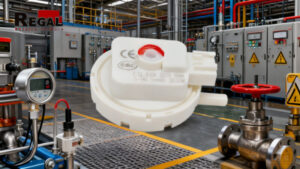
Le pressostat of a dishwasher is an important part. It is responsible for detecting the water pressure inside the dishwasher and controlling the water flow when necessary. If the pressure switch fails, the dishwasher will not work properly. Here are some possible causes and solutions for the failure of the dishwasher pressure switch.
1. Failure of the pressure switch itself. The dishwasher pressure switch may be damaged, aged, or malfunctioning, and cannot detect the water pressure normally.
Solution: A new pressure switch needs to be replaced, and it is strongly recommended to be replaced by a professional technician.
2. Blockage by attachments. When the dishwasher is blocked inside, it will affect the water flow and thus the water pressure; and the pressure switch will also be easily covered by attachments, affecting its operation.
Solution: Check the filter and spray arm in the dishwasher for attachments and clean them; if necessary, clean the pressure switch itself and restore its operation.
3. Water leakage causes pressure drop. When the dishwasher leaks, the pressure will drop and the pressure switch may not work properly.
Solution: Check the bottom of the dishwasher for leaks and repair or replace damaged parts.
4. Water valve failure. The dishwasher’s water valve is also responsible for controlling the water flow. When the water valve loses its function, the pressure switch may not work properly.
Solution: Check whether the dishwasher’s water valve is working properly. If necessary, replace the damaged valve.
5. Circuit problem. If there is a problem with the dishwasher’s circuit, the pressure switch may not work properly.
Solution: Check whether the dishwasher’s circuit is normal. If necessary, repair or replace damaged parts.
In short, the failure of the dishwasher’s pressure switch will cause the dishwasher to not work properly and affect home life. When a problem occurs, it needs to be checked and solved in time. It is recommended to seek help from professional technicians.
Traitement de l'eau : Lors du traitement de l'eau, des capteurs de niveau d'eau peuvent être utilisés pour détecter le niveau d'eau des réservoirs de purification, des réservoirs de préparation, etc., afin de garantir une qualité d'eau stable.
Protection de l'environnement : Dans le traitement des eaux usées, des capteurs de niveau d'eau peuvent être utilisés pour surveiller le niveau d'eau des bassins, des bassins de décantation et des bassins de préparation afin de garantir que les eaux usées puissent être rejetées et traitées.
Gestion de l'eau : Dans les projets de gestion de l'eau, les capteurs de niveau d'eau peuvent être utilisés pour la surveillance du niveau d'eau, l'alerte précoce et le contrôle des barrages, des canaux de dérivation, des réservoirs et des canaux d'irrigation.