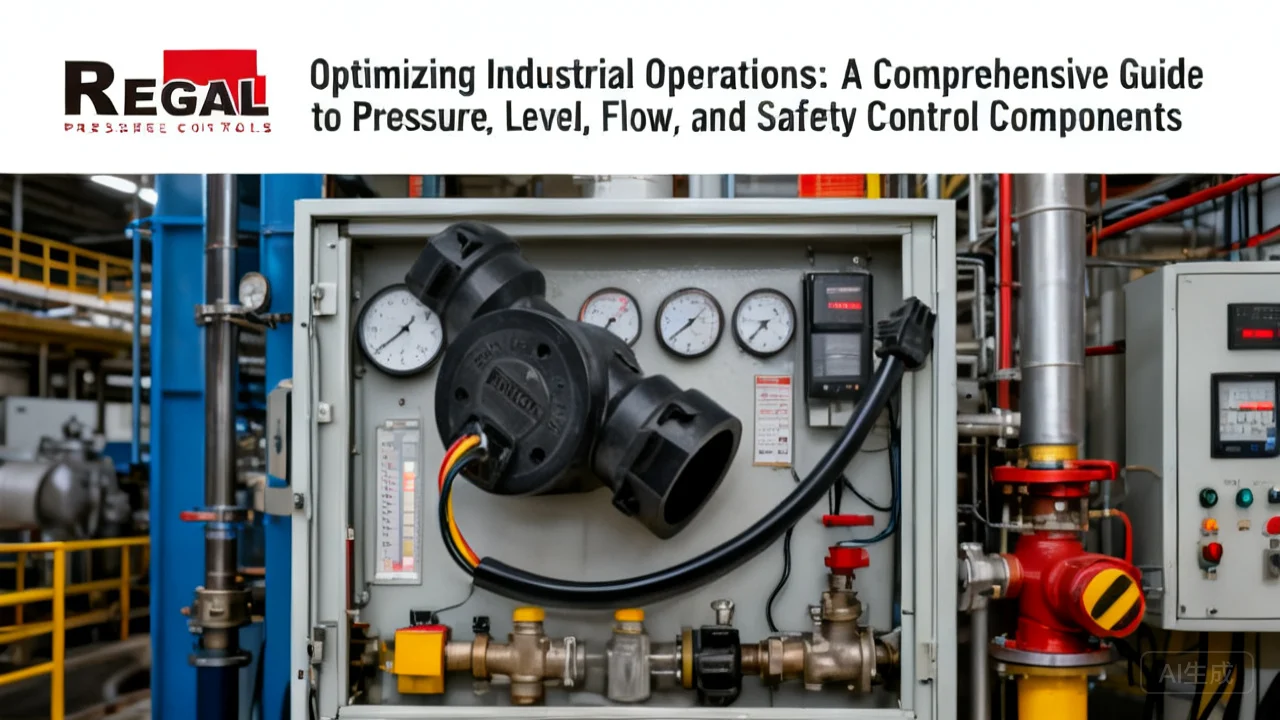
In the intricate world of industrial operations, precision, safety, and efficiency are paramount. Every component, from the smallest sensor to the most robust valve, plays a critical role in maintaining seamless processes and safeguarding personnel and equipment. This guide delves into the indispensable functions of pressure switches, water level switches and sensors, flow sensors, and safety relief valves – core elements that underpin reliable industrial automation and control systems.
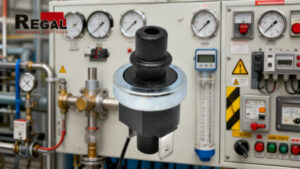
Pressure switches are electromechanical devices designed to monitor the pressure of a fluid or gas, providing an electrical contact output when a pre-set pressure is reached. They are ubiquitous across industries, acting as critical control and safety mechanisms.
Interruptores de pressão de ar
Engineered for pneumatic systems, HVAC applications, and air compressors, air pressure switches ensure air pressure remains within specified operational limits. They can activate or deactivate compressors, trigger alarms, or control ventilation based on pressure fluctuations, preventing inefficiency or damage from over- or under-pressurization.
Interruptores de pressão de água
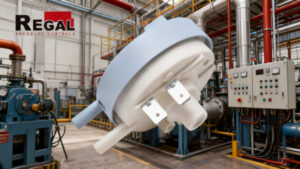
Essential in water management, water pressure switches regulate pumps, irrigation, and water treatment plants. They maintain desired water pressure by initiating or stopping pumps, protecting them from dry-running, or signaling low-pressure conditions. Their reliability is key to consistent water supply and process integrity.
Selection Considerations for Pressure Switches
- Set Point and Hysteresis: Critical for precise control, defining activation and deactivation pressures.
- Compatibilidade de mídia: Ensuring switch materials suit the fluid or gas being monitored.
- Classificação elétrica: Matching the switch’s electrical capacity to the controlled load.
- Operating Temperature: Verifying performance within environmental extremes.
- Enclosure Rating: Protection against dust, water, and hazardous environments.
Mastering Liquid Management: Water Level Switches and Sensors
Accurate liquid level monitoring is vital for preventing overflows, protecting pumps, optimizing inventory, and ensuring consistent process quality. Water level switches and sensors provide the necessary intelligence for effective liquid management.
Interruptores de nível de água
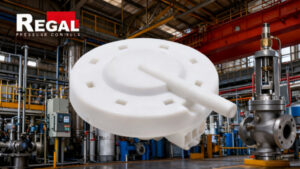
These devices typically provide a discrete ON/OFF signal at a specific liquid level. Float switches are common, using a buoyant element to mechanically actuate a switch. They are robust, reliable, and used for high-level alarms, low-level pump protection, or simple fill/drain control in tanks, sumps, and reservoirs.
Sensores de nível de água
Unlike switches, water level sensors provide continuous measurement, offering real-time data. Technologies include:
- Ultrasonic Sensors: Non-contact, ideal for corrosive liquids or where physical contact is undesirable.
- Hydrostatic Sensors: Measure pressure exerted by the liquid column, providing highly accurate readings, often for deep tanks.
- Radar Sensors: Offer high accuracy and reliability, even in challenging environments with foam, vapor, or varying temperatures.
The choice between a switch and a sensor, and the specific technology, depends on required accuracy, liquid nature, and environmental conditions.
Ensuring Smooth Flow: The Power of Flow Sensors
Monitoring the flow rate of liquids and gases is fundamental to process control, quality assurance, and resource management. Flow sensors provide the data needed to optimize production, detect leaks, and ensure compliance.
Applications and Types
Flow sensors are employed in diverse applications, from measuring cooling water to precisely dosing chemicals. Common types include:
- Turbine Flow Sensors: Measure flow by detecting the rotational speed of a turbine rotor.
- Magnetic Flow Sensors (Magmeters): Ideal for conductive liquids, measuring flow by sensing induced voltage.
- Ultrasonic Flow Sensors: Non-invasive, measuring flow by analyzing the effect of fluid on sound waves.
- Thermal Mass Flow Sensors: Excellent for gas flow measurement, utilizing heat transfer properties.
Accurate flow measurement contributes significantly to energy efficiency, prevents material waste, and helps maintain product consistency.
The Unsung Heroes of Safety: Safety Relief Valves
Perhaps the most critical components for protecting personnel and equipment from catastrophic failure are safety relief valves. These devices automatically release excess pressure from a system, preventing over-pressurization that could lead to explosions or ruptures.
Function and Importance
Safety relief valves are passive devices that activate when system pressure exceeds a predetermined set point. They are indispensable in applications involving boilers, pressure vessels, pipelines, and chemical processing. Their ability to rapidly vent pressure ensures system integrity, avoiding costly downtime, environmental damage, and, most importantly, loss of life.
Types and Selection
- Spring-Loaded Relief Valves: The most common type, where a spring holds the disc closed. When inlet pressure exceeds spring force, the disc lifts, discharging fluid.
- Pilot-Operated Relief Valves (PORV): Use system pressure to assist in holding the main valve closed, offering closer set point control and higher flow capacities. Used in larger, more critical applications.
Proper selection involves considering set pressure, flow capacity, fluid compatibility, operating temperature, and adherence to relevant industry codes like ASME.
Integrating “Parts” for System Reliability
Beyond the primary components, system reliability hinges on the quality of its “parts” – connectors, seals, mounting hardware, and spare components. Investing in high-quality parts for maintenance and repairs extends the operational life of expensive machinery and minimizes unforeseen downtime.
Conclusão
The synergy of robust pressure switches, precise water level switches and sensors, accurate flow sensors, and indispensable safety relief valves forms the backbone of modern industrial control and safety systems. By understanding their functions, selecting appropriate technology, and ensuring proper installation and maintenance, businesses achieve unparalleled operational efficiency, safeguard assets, and protect their workforce. These components are integral contributors to a reliable, safe, and productive industrial future.