In the complex world of industrial operations, maintaining precise control over processes and ensuring the safety of personnel and equipment are paramount. From manufacturing plants to water treatment facilities, the efficiency and reliability of systems hinge on the performance of critical components that monitor and regulate key parameters. Among these indispensable devices are pressure switches, water level switches and sensors, flow sensors, and safety relief valves – each playing a vital role in achieving operational excellence and mitigating risks.
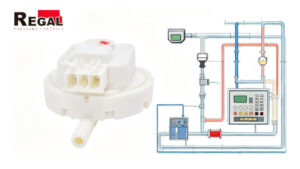
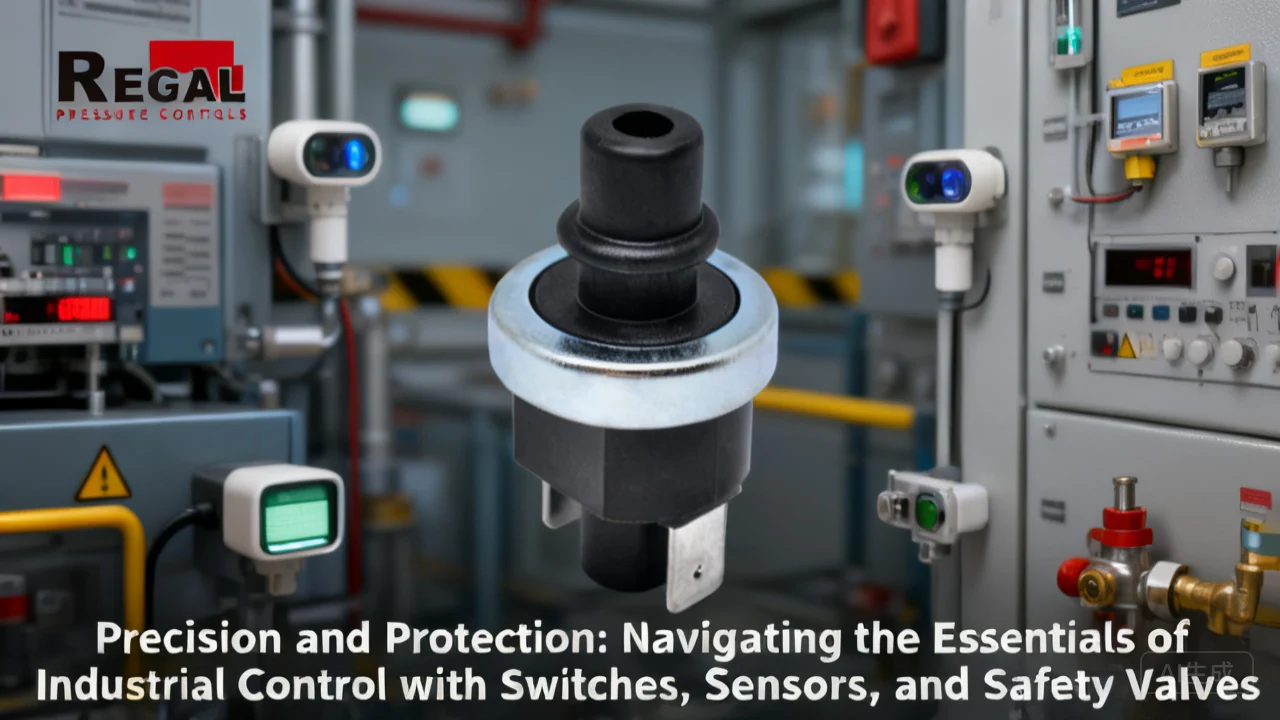
Pressure switches are electromechanical devices designed to respond to a change in pressure by opening or closing an electrical contact. They act as guardians of system integrity, triggering alarms, starting/stopping pumps, or activating other control mechanisms when pressure deviates from a predefined set point. Their applications are vast and varied:
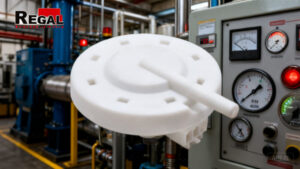
- Interruptores de pressão de ar: Commonly found in HVAC systems, air compressors, pneumatic equipment, and vacuum systems. They ensure compressors don’t over-pressurize tanks or that air filters aren’t clogged, maintaining optimal airflow and preventing damage.
- Interruptores de pressão de água: Essential for water pumps, irrigation systems, and boiler controls. They regulate water supply, prevent dry running of pumps, and maintain consistent pressure in distribution networks.
Key considerations for selecting a pressure switch include the operating pressure range, media compatibility (air, water, oil, refrigerants), hysteresis (the difference between the switch’s cut-in and cut-out points), and environmental conditions. Diaphragm, piston, and bellows types offer different sensitivities and durability for various applications, underscoring the importance of precise specification for long-term reliability.
Monitoring the Unseen: Water Level Switches & Sensors
Managing fluid levels is critical in numerous industrial processes, from chemical storage to wastewater management. Water level switches provide discrete (on/off) indications, while water level sensors offer continuous measurement, allowing for more granular control.
- Interruptores de nível de água: Simple and robust, float switches are common for activating pumps to fill or empty tanks, or for high/low level alarms. Conductivity probes are another type, detecting liquid presence based on electrical resistance, often used in conductive liquids.
- Sensores de nível de água: For applications requiring continuous level monitoring, various technologies are employed:
- Ultrasonic Sensors: Emit sound waves and measure the time it takes for the echo to return, ideal for non-contact measurement in tanks.
- Hydrostatic Sensors: Measure the pressure exerted by the liquid column, converting it into a level reading. They offer high accuracy and are often submerged.
- Capacitive Sensors: Detect changes in capacitance caused by the presence of a liquid, suitable for various liquid types and even solids.
- Radar Sensors: Similar to ultrasonic but use microwave pulses, offering superior performance in challenging environments (e.g., steam, foam, varying temperatures).
The choice between a switch and a sensor, and the specific technology, depends on the required accuracy, the liquid’s properties (viscosity, corrosiveness, temperature), and the presence of agitators or foam.
O pulso do processo: sensores de fluxo
Flow sensors are instrumental in monitoring the movement of liquids and gases through pipes, enabling precise control over batching, mixing, and consumption. Accurate flow measurement is vital for process optimization, quality control, and even leak detection.
- Paddle Wheel Flow Sensors: Cost-effective and widely used, they measure flow by detecting the rotation of a paddle wheel inserted into the flow path.
- Turbine Flow Sensors: Offer higher accuracy, using a turbine rotor whose rotational speed is proportional to the fluid velocity.
- Electromagnetic (Mag) Flow Sensors: Ideal for conductive liquids, these sensors have no moving parts, offering minimal pressure drop and high accuracy, especially for slurries and corrosive fluids.
- Thermal Mass Flow Sensors: Measure the mass flow rate of gases by detecting heat transfer from a heated element, unaffected by pressure or temperature changes.
- Ultrasonic Flow Sensors: Can be clamp-on (non-invasive) or wetted, measuring flow by analyzing the time difference of ultrasonic pulses traveling with and against the flow.
Selecting the right flow sensor involves considering the fluid type, flow rate range, required accuracy, pressure and temperature limits, and the presence of solids or entrained gases. Their integration into control systems allows for real-time adjustments, preventing inefficiencies and ensuring product consistency.
Guardians of Safety: Safety Relief Valves
Perhaps the most critical components for protecting personnel and capital equipment from catastrophic failure due to overpressure are safety relief valves (SRVs). These mechanical devices are designed to automatically vent excess pressure from boilers, pressure vessels, and piping systems, preventing them from exceeding their maximum allowable working pressure (MAWP).
- Relief Valves: Typically used for incompressible fluids (liquids), they open proportionally to the increase in pressure above the set point.
- Safety Valves: Primarily for compressible fluids (gases, steam), they typically pop open rapidly to full lift once the set pressure is reached, ensuring a rapid discharge of excess pressure.
- Safety Relief Valves: A hybrid term often used to describe valves that can function as either a relief or a safety valve depending on the application and fluid.
The correct sizing, selection of materials (compatible with the process fluid and temperature), and regular testing of SRVs are non-negotiable. Compliance with industry standards like ASME Boiler and Pressure Vessel Code and API standards is paramount. A properly functioning SRV is the last line of defense, safeguarding against explosions, equipment damage, and environmental incidents, making their reliability absolutely essential.
The Foundation of Reliability: Quality and Parts
The performance and longevity of any industrial system are only as good as the components that comprise it. For critical applications involving pressure, level, and flow control, investing in high-quality switches, sensors, and safety valves from reputable manufacturers is not merely an expense but a strategic investment in operational continuity and safety. Furthermore, the availability of genuine spare parts and knowledgeable technical support ensures that systems can be maintained, repaired, and optimized efficiently, minimizing downtime and extending the lifespan of valuable assets.
In the intricate dance of industrial automation, pressure switches, water level and flow sensors, and safety relief valves stand as pillars of control and safety. Their precise operation enables optimal resource management, prevents costly damage, and most importantly, protects human lives. Understanding their diverse functionalities and selecting the appropriate devices for each unique application is fundamental to building robust, efficient, and safe industrial processes that thrive in today’s demanding operational landscapes.