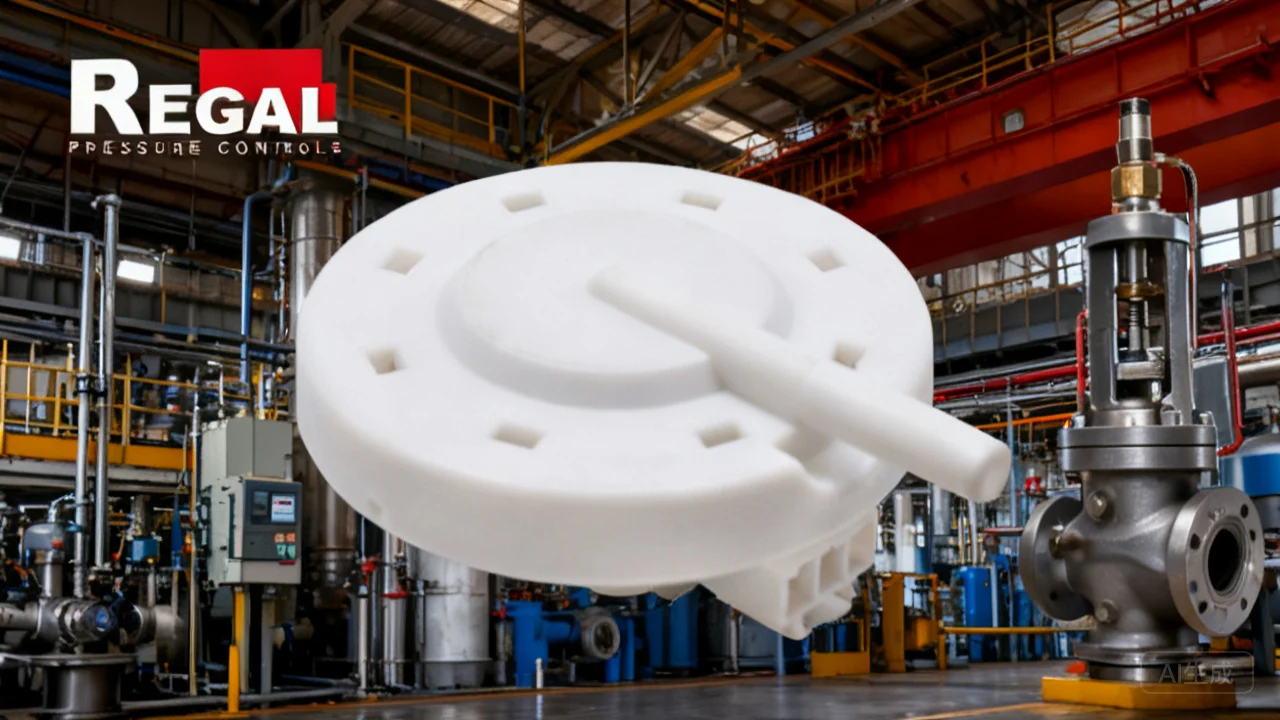
In the complex tapestry of modern industrial operations, precision, safety, and efficiency are not just goals; they are fundamental requirements. Achieving these benchmarks relies heavily on the diligent performance of specialized components that monitor, control, and protect critical systems. Among these indispensable devices are pressure switches, water level sensors, flow sensors, and safety relief valves – each playing a unique yet interconnected role in ensuring operational excellence across diverse B2B applications.
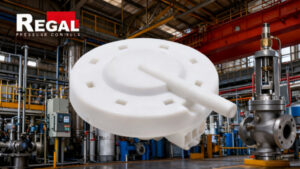
Pressure switches are electromechanical devices designed to respond to a change in pressure within a system. They act as critical control points, opening or closing an electrical contact when a predetermined pressure threshold is reached. Their simplicity belies their profound importance in preventing equipment damage, optimizing performance, and ensuring safety.
Interruptores de pressão de ar are commonly found in HVAC systems, pneumatic control circuits, air compressors, and vacuum systems. They monitor air flow or pressure differentials to trigger actions such as starting or stopping fans, blowers, or compressors, or activating alarms. For instance, in a ventilation system, an air pressure switch might detect a clogged filter by sensing a pressure drop, signaling the need for maintenance.
Interruptores de pressão de água, conversely, are vital in fluid management systems. They regulate water pumps in booster systems, prevent tanks from overflowing or running dry, and protect water treatment plants from excessive pressure. In a well pump application, a water pressure switch ensures the pump only operates when system pressure drops below a set point, maintaining consistent water supply while conserving energy and extending pump life.
Water Level Management: Precision for Prevention and Efficiency
Managing fluid levels is crucial across industries, from municipal water treatment to chemical processing. This is where Interruptores de nível de água e Sensores de nível de água come into play, offering distinct yet complementary functionalities.
A Interruptor de nível de água typically provides a discrete on/off signal when a specific liquid level is reached. These are ideal for simple control tasks like activating a pump to fill a tank when the level is low, or shutting it off to prevent overflow. They are robust, reliable, and often used in sumps, reservoirs, and process tanks for high or low-level alarms.
A Sensor de nível de água, on the other hand, offers continuous measurement of the liquid level, providing an analog or digital output proportional to the level. This allows for more sophisticated control and monitoring, enabling operators to know the exact volume of fluid in a tank at all times. Applications include inventory management, continuous process control, and advanced flood prevention systems. Capacitive, ultrasonic, hydrostatic, and float-type sensors each offer specific advantages depending on the fluid properties and environmental conditions.
Flow Sensors: Monitoring the Pulse of Production
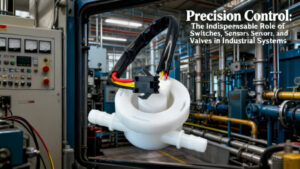
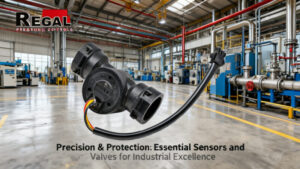
The ability to accurately measure and monitor the flow rate of liquids or gases is paramount in many industrial processes. Sensores de fluxo provide real-time data that is essential for quality control, resource management, and process optimization.
These devices come in various technologies, including paddle wheel, electromagnetic, Coriolis, ultrasonic, and thermal mass types, each suited for different applications and fluid characteristics. For example, in chemical plants, flow sensors ensure precise mixing ratios. In water distribution networks, they help detect leaks and manage consumption. By providing critical feedback on flow rates, these sensors enable industries to maintain product consistency, identify inefficiencies, and prevent costly process deviations.
Safety Relief Valves: The Ultimate Guardians of Pressure Systems
While pressure switches control normal operations, Safety Relief Valves (SRVs) are the last line of defense against catastrophic overpressure events. These mechanical devices are designed to automatically open and discharge fluid when the internal pressure of a vessel or system exceeds a predetermined safe limit, thereby protecting equipment, personnel, and the environment.
SRVs are non-reclosing, meaning they will not re-close once opened until the system pressure drops to an acceptable level. They are mandatory in virtually all pressure vessels, boilers, pipelines, and industrial systems where overpressure could lead to explosion, rupture, or dangerous emissions. Their proper selection, installation, and regular maintenance are not just good practice but are often legally mandated by regulatory bodies to ensure plant safety and operational integrity.
The Synergy of Components and Quality Parts
The effectiveness of any industrial system is not solely dependent on individual components but on how seamlessly they integrate and the quality of the parts that constitute them. High-quality Peças for pressure switches, sensors, and valves ensure longevity, accuracy, and reliability, minimizing downtime and maintenance costs.
When these devices – pressure switches, level sensors, flow sensors, and safety relief valves – are chosen wisely and integrated into a cohesive control system, they form a robust framework for automation, safety, and efficiency. They enable proactive maintenance, precise process control, and critical emergency response, safeguarding assets and ensuring continuous, reliable operation.
Investing in reliable industrial control components is an investment in the future of your operations. It’s about more than just monitoring; it’s about empowering systems to perform optimally, safely, and sustainably in an increasingly demanding industrial landscape.