In the complex landscape of modern industry, efficiency, safety, and operational continuity hinge on the precise monitoring and control of critical parameters. From manufacturing plants to water treatment facilities, and from HVAC systems to chemical processing, the ability to accurately sense pressure, liquid levels, and fluid flow is paramount. Industrial sensing and control devices — such as pressure switches, water level sensors, flow sensors, and safety relief valves — are not merely components; they are the vigilant guardians and intelligent orchestrators that ensure systems operate within optimal and safe limits. Neglecting their importance can lead to costly downtime, equipment damage, safety hazards, and regulatory non-compliance. This article explores the vital functions of these devices and their collective impact on industrial operations.
Druckschalter: Die Wächter der Systemintegrität
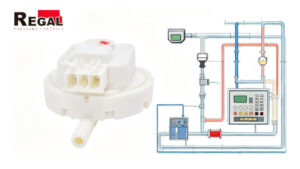
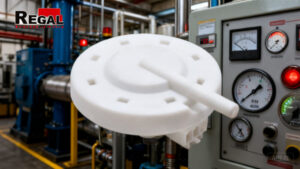
Pressure switches are fundamental control devices designed to monitor the pressure within a system and trigger an electrical contact when a predefined pressure threshold is reached. They serve as critical safety and operational components, preventing equipment damage and ensuring process stability.
Luftdruckschalter
Air pressure switches are widely used in pneumatic systems, HVAC applications, and industrial machinery where compressed air is utilized. Their primary functions include:
- Compressor Control: Starting and stopping air compressors based on tank pressure.
- Filter Monitoring: Indicating clogged filters by detecting a pressure drop.
- Fan & Blower Control: Ensuring adequate airflow in ventilation and combustion systems.
- Safety Interlocks: Preventing machinery operation if air pressure is insufficient.
Reliable air pressure switches contribute significantly to energy efficiency and the longevity of pneumatic equipment.
Wasserdruckschalter
Essential in hydraulic systems, pumping stations, and water distribution networks, water pressure switches provide crucial control and protection:
- Pump Control: Activating or deactivating pumps to maintain desired water pressure in pipelines or tanks.
- Booster Systems: Regulating pressure in domestic and industrial water supply systems.
- Irrigation: Ensuring consistent water delivery pressure for agricultural applications.
- Leckerkennung: Monitoring abnormal pressure drops that could indicate leaks.
These switches are vital for preventing pipe bursts, pump cavitation, and ensuring consistent fluid delivery.
Water Level Switches & Sensors: Mastering Fluid Management
Managing liquid levels is a critical aspect of countless industrial processes, from chemical mixing to wastewater treatment. Water level switches and sensors provide the necessary intelligence to prevent overflows, dry-running, and optimize fluid utilization.
Wasserstandsschalter
These devices provide a discrete ON/OFF signal when a specific liquid level is reached. Common types include float switches, conductive switches, and vibrating fork switches. Applications range from simple tank level alarms to controlling pump operations in sumps or reservoirs.
Wasserstandssensoren
Unlike switches, water level sensors provide continuous measurement of liquid levels, offering more granular control and data for process optimization. Technologies like ultrasonic, hydrostatic, and radar sensors are employed for various applications:
- Process Tanks: Monitoring levels in mixing vessels, reactors, and storage tanks.
- Boilers: Ensuring safe operating levels to prevent damage and optimize steam generation.
- Wastewater Treatment: Controlling levels in clarifiers, digesters, and lift stations.
- Groundwater Monitoring: Tracking water tables for environmental and resource management.
Accurate level sensing prevents costly spills, optimizes chemical dosing, and protects pumps from dry-running damage.
Flow Sensors: The Pulse of Fluid Movement
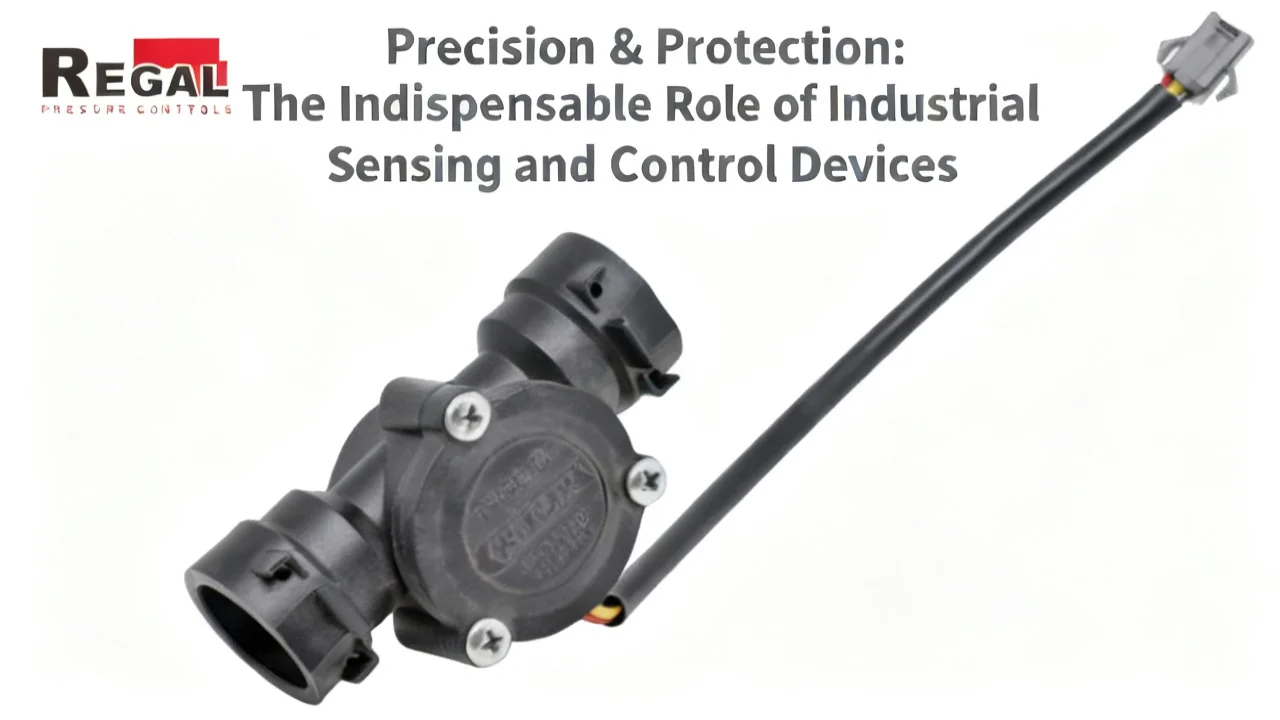
Understanding and controlling the rate at which fluids move through a system is crucial for quality control, resource management, and process integrity. Flow sensors measure the volume or mass of fluid passing through a pipe per unit of time.
- Process Monitoring: Ensuring correct flow rates for chemical reactions, cooling loops, and lubrication systems.
- Batch Control: Precisely dispensing specific volumes of liquids in manufacturing.
- Water & Wastewater: Monitoring consumption and effluent discharge.
- HVAC: Verifying adequate coolant flow to heat exchangers.
From paddle wheel to ultrasonic and electromagnetic types, the right flow sensor ensures efficiency and prevents process deviations.
Sicherheitsventile: Die letzte Verteidigungslinie
While sensing and control devices aim to maintain optimal conditions, unforeseen circumstances or system failures can lead to dangerous overpressure situations. This is where safety relief valves become absolutely indispensable.
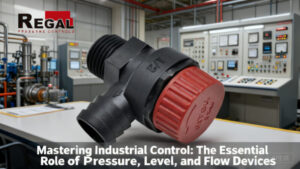
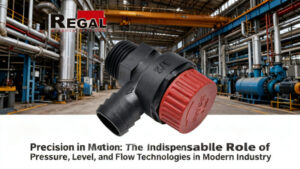
A safety relief valve is an automatic pressure-relieving device actuated by the static pressure upstream of the valve and designed to open proportionately with increasing pressure. Its sole purpose is to protect pressure vessels, pipelines, and other equipment from exceeding their design pressure limits, thereby preventing catastrophic failures, explosions, and safeguarding personnel.
- Boilers & Heat Exchangers: Releasing excess steam or fluid pressure.
- Pressure Vessels: Protecting storage tanks for gases or liquids.
- Pipelines: Preventing overpressure due to thermal expansion or pump surges.
- Compressors & Pumps: Guarding against system blockage or malfunction.
These valves are critical for compliance with safety regulations and are non-negotiable components in any pressurized system.
The Importance of Quality Parts and Strategic Selection
The reliability of an entire industrial system is only as strong as its weakest link. Therefore, selecting high-quality pressure switches, level sensors, flow sensors, and safety relief valves, along with their associated parts, is paramount. Investing in durable, accurate, and certified components minimizes maintenance, extends operational lifespan, and ensures consistent performance. Manufacturers must consider environmental conditions, media compatibility, pressure ranges, accuracy requirements, and regulatory standards when choosing these critical devices.
Abschluss
Industrial sensing and control devices are the unsung heroes of modern automation. Pressure switches, water level sensors, flow sensors, and safety relief valves collectively form a robust framework for operational excellence, efficiency, and, most importantly, safety. By providing real-time data, initiating protective actions, and preventing catastrophic failures, they empower industries to operate with greater confidence and control. Understanding their diverse functions and strategically implementing these indispensable components is key to building resilient, productive, and safe industrial environments for the future.