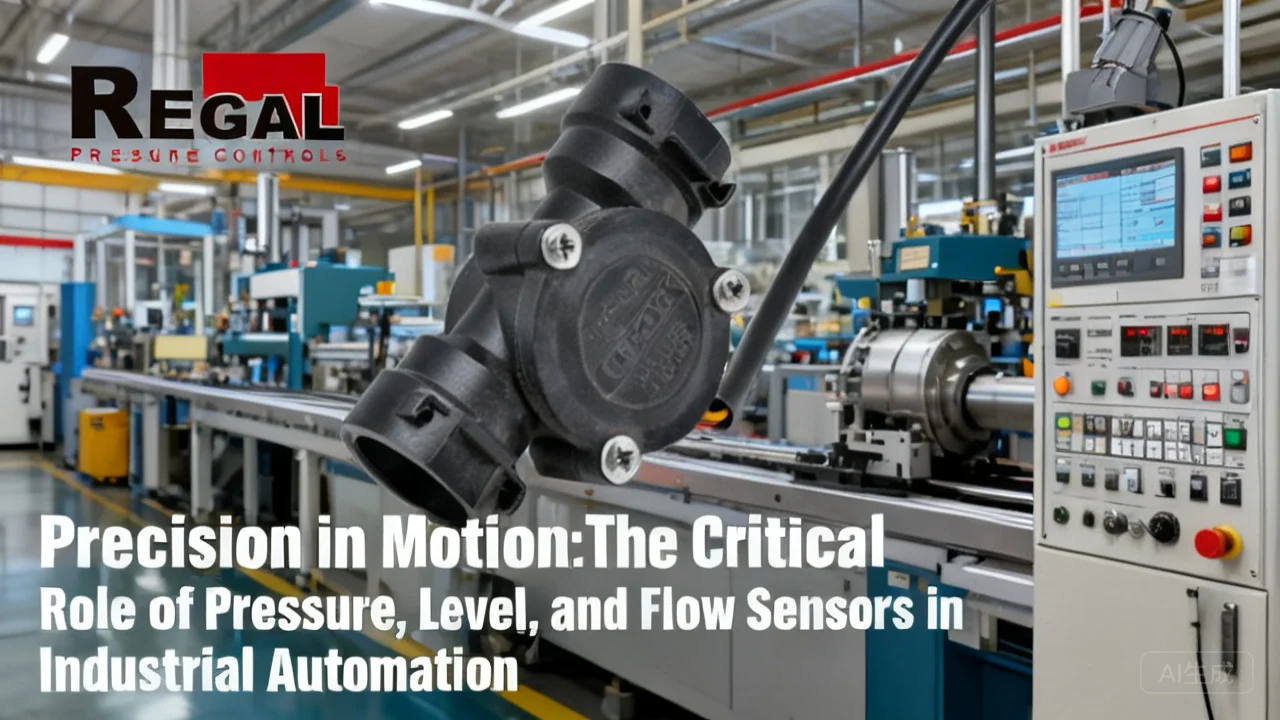
In the intricate world of industrial automation, precision, reliability, and safety are paramount. Behind every seamlessly operating system, there’s a network of critical components constantly monitoring and controlling vital parameters. Among these, pressure switches, water level sensors, and flow sensors stand out as the ‘eyes and ears’ of industrial processes. They provide the real-time data necessary to maintain optimal performance, prevent costly downtime, and ensure the safety of personnel and equipment. This article delves into the indispensable functions of these devices and their profound impact across various sectors.
Pressure Switches: Guardians Against Extremes
Pressure switches are electromechanical devices designed to monitor the pressure of gases or liquids and trigger an electrical switch when a predetermined pressure threshold is reached. They are fundamental in a vast array of applications, acting as critical control and safety components.
Air Pressure Switches
Air pressure switches are commonly found in HVAC systems, pneumatic control systems, air compressors, and vacuum systems. They ensure that air pressure remains within safe and operational limits. For instance, in an air compressor, an air pressure switch will activate the motor when the tank pressure drops below a set point and deactivate it when the desired pressure is achieved, preventing over-pressurization and saving energy. In HVAC, they monitor duct pressure to ensure proper airflow and filter conditions.
Water Pressure Switches
Similarly, water pressure switches are essential for managing liquid systems. They are widely used in pump control, irrigation systems, water treatment plants, and industrial cooling systems. A water pressure switch on a well pump, for example, maintains consistent water supply by turning the pump on and off based on system pressure demands. In fire suppression systems, they are vital for detecting pressure drops that indicate a discharge, triggering alarms or pump activation. Their robust design often accounts for corrosive environments and varying fluid dynamics.
Key Considerations for Pressure Switches:
- Set Point & Hysteresis: The pressure at which the switch activates/deactivates and the differential to prevent rapid cycling.
- Media Compatibility: Materials (e.g., stainless steel, brass) must be suitable for the fluid or gas.
- Pressure Range: Must match the application’s operating pressures.
- Electrical Rating: Compatibility with the control system’s voltage and current.
- Certifications: ATEX, UL, CE for hazardous environments or specific industry standards.
Water Level Sensors & Switches: Monitoring the Depths
Managing liquid levels is crucial in countless industrial processes, from storage tanks to wastewater treatment. Water level sensors and switches provide accurate, reliable data, preventing overflows, dry-running of pumps, and ensuring precise dosing.
Water Level Switches
These devices typically provide a discrete output (on/off) when a liquid reaches a specific level. Common types include:
- Float Switches: Simple, mechanical devices that use a buoyant float to actuate a switch as the liquid level rises or falls. Ideal for basic tank level control and pump protection.
- Conductivity Switches: Utilize electrodes to detect the presence of a conductive liquid between them. Often used in boilers and sumps.
Water Level Sensors
Unlike switches, sensors provide a continuous output, allowing for precise measurement of liquid levels. Types include:
- Ultrasonic Sensors: Emit sound waves that bounce off the liquid surface, calculating the distance based on the time-of-flight. Non-contact, suitable for various liquids.
- Hydrostatic Sensors: Measure the pressure exerted by the liquid column, which is directly proportional to its depth. Submersible, ideal for deep tanks and reservoirs.
- Capacitance Sensors: Detect changes in capacitance as the liquid level changes, suitable for a wide range of liquids and can be used for continuous measurement or point level detection.
Applications:
From monitoring water levels in large industrial storage tanks to ensuring optimal chemical levels in processing vats, level sensing is vital for inventory management, process control, and environmental protection.
Flow Sensors: Measuring the Pulse of the System
Flow sensors, or flow meters, are instrumental in measuring the rate of fluid (liquid or gas) movement through a pipe or conduit. Accurate flow measurement is critical for efficiency, quality control, and safety in many industries.
Types and Applications:
- Turbine Flow Meters: Use a rotating turbine to measure flow rate, common in fuel and water metering.
- Magnetic Flow Meters: Ideal for conductive liquids, offering high accuracy and minimal pressure drop, often used in wastewater and chemical processing.
- Ultrasonic Flow Meters: Non-invasive, measuring flow by transmitting ultrasonic waves through the fluid. Suitable for clean liquids and can be clamped onto the outside of pipes.
- Thermal Mass Flow Meters: Measure the heat required to maintain a constant temperature difference across two sensors, primarily used for gas flow measurement.
Flow sensors are crucial in chemical dosing, irrigation systems, pharmaceutical manufacturing, and HVAC systems for monitoring coolant or refrigerant flow, ensuring processes adhere to specified parameters and optimizing resource consumption.
Safety Relief Valves: The Last Line of Defense
While not sensors, Safety Relief Valves (SRVs) are integral components of any pressure management system, working in conjunction with pressure switches and other controls. An SRV is a mechanical device designed to automatically release pressure from a vessel or system when the internal pressure exceeds a predetermined limit, thereby preventing catastrophic failure due to over-pressurization. They are the ultimate safeguard, acting independently of any control system to ensure equipment and personnel safety.
Selecting the Right Components: A Holistic Approach
Choosing the appropriate pressure switch, water level sensor, or flow sensor requires a comprehensive understanding of the application’s specific demands:
- Media Characteristics: Type of fluid/gas, temperature, viscosity, corrosiveness.
- Operating Conditions: Pressure range, flow rate, ambient temperature, vibration.
- Accuracy & Repeatability: The required precision for the application.
- Environmental Factors: Hazardous areas (explosion-proof requirements), dust, moisture.
- Output Requirements: Digital (on/off) or analog (continuous) signals, communication protocols (e.g., 4-20mA, Modbus).
- Material Compatibility: Ensuring the device materials can withstand the process media without degradation.
Conclusion: Empowering Industrial Excellence
Pressure switches, water level sensors, and flow sensors are far more than just individual components; they are the bedrock of modern industrial automation and safety. By providing precise, real-time data and control, they enable industries to optimize processes, enhance operational efficiency, reduce waste, and, most importantly, maintain a safe working environment. Investing in high-quality, appropriately selected sensing and control devices is not just a technical decision; it’s a strategic imperative for achieving excellence and resilience in today’s competitive industrial landscape.