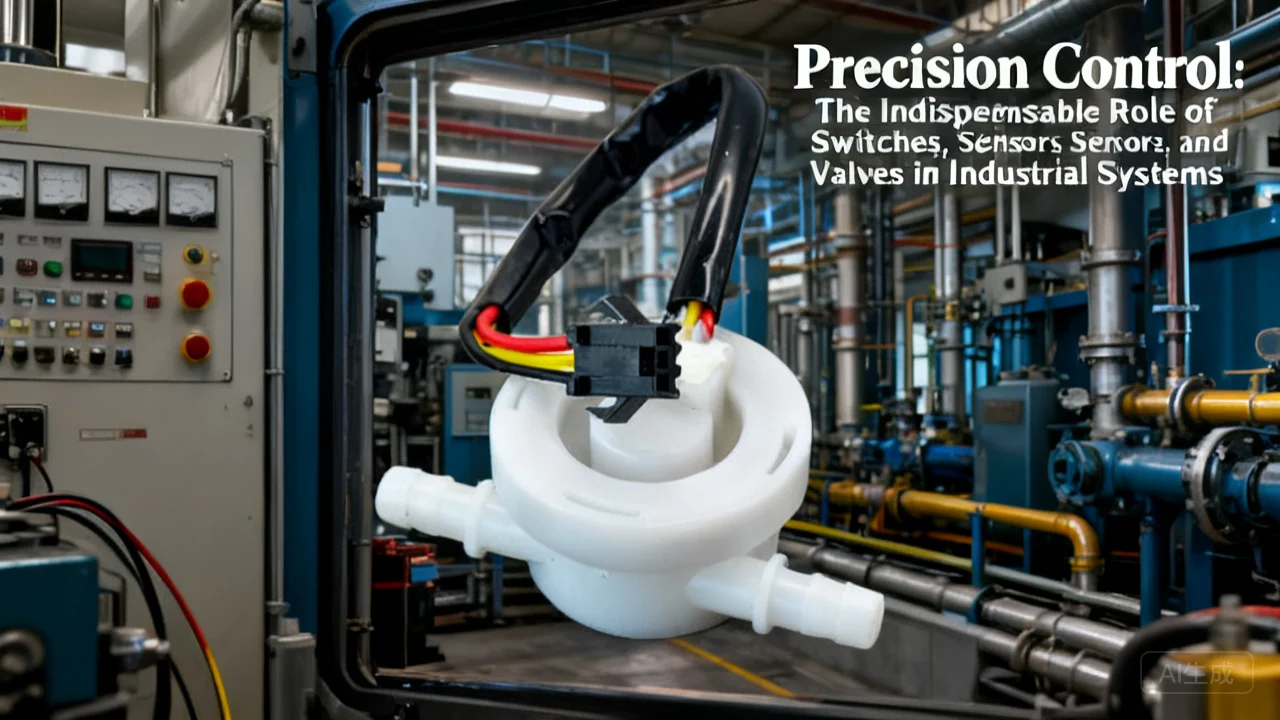
In the complex landscape of modern industrial operations, precision, safety, and efficiency are paramount. At the heart of achieving these critical objectives lies a suite of often-underestimated components: pressure switches, level sensors, flow sensors, and safety relief valves. These devices are not merely accessories but fundamental guardians of process integrity, equipment longevity, and, most importantly, human safety. Understanding their functions, applications, and proper selection is crucial for any B2B enterprise striving for operational excellence.
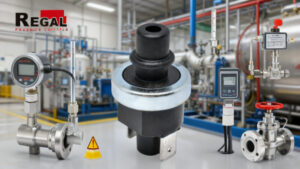
Pressure switches are electromechanical devices designed to monitor and respond to changes in fluid or gas pressure within a system. They act as critical control points, activating or deactivating electrical circuits when a predefined pressure threshold is met. Their reliability and simplicity make them ubiquitous across diverse industrial sectors.
Air Pressure Switches: Guardians of Pneumatic and Combustion Systems
Air pressure switches are vital in applications ranging from HVAC systems and pneumatic machinery to combustion control in industrial furnaces. In HVAC, they monitor fan and filter status, ensuring proper airflow and preventing system damage. In pneumatic systems, they can control compressor operation, signal low-pressure conditions, or interlock safety circuits. For combustion, they verify adequate air supply before burner ignition, a critical safety measure preventing dangerous fuel accumulation.
- HVAC: Monitoring differential pressure across filters, fan proving.
- Pneumatics: Compressor control, low-pressure alarms, tool interlocks.
- Combustion: Airflow verification, gas pressure monitoring.
Water Pressure Switches: Essential for Fluid Management
Water pressure switches are indispensable in water treatment plants, irrigation systems, and industrial cooling loops. They regulate pump operation, ensuring consistent water supply and preventing dry-run conditions. For instance, in a well pump system, a water pressure switch maintains desired system pressure by cycling the pump on and off. In fire suppression systems, they can activate alarms or initiate pump startup upon a pressure drop, indicating activation.
- Pumps: Automatic control for constant pressure.
- Irrigation: Maintaining optimal water delivery.
- Water Treatment: Monitoring filter backwash cycles, system pressure.
Sensing the Unseen: Water Level Switches and Sensors
Managing fluid levels is critical in storage, processing, and waste management. Water level switches and sensors provide the necessary intelligence to prevent overflows, protect pumps, and maintain process consistency.
Water Level Switches: Point-Level Detection
Water level switches provide point-level detection, indicating when a fluid reaches a specific high or low point. Common types include float switches, which use buoyancy to activate a switch, and conductivity probes, which detect the presence of a conductive liquid between electrodes. They are ideal for simple ON/OFF control, such as activating a pump to empty a sump or refilling a tank.
Water Level Sensors: Continuous Measurement for Precision
For applications requiring continuous monitoring and precise level measurement, water level sensors are employed. Technologies like ultrasonic, radar, and hydrostatic (pressure-based) sensors provide analog or digital outputs proportional to the fluid level. This continuous data is crucial for inventory management, process control, and sophisticated automation systems, allowing for predictive maintenance and optimized resource allocation.
- Ultrasonic Sensors: Non-contact, ideal for various liquids.
- Hydrostatic Sensors: Submersible, measure pressure exerted by the liquid column.
- Radar Sensors: Highly accurate, suitable for challenging environments.
The Pulse of the Process: Flow Sensors
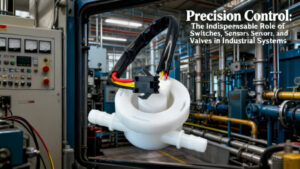
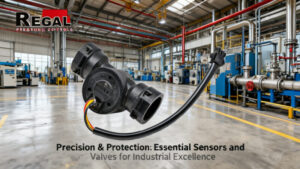
Flow sensors measure the rate at which a fluid or gas moves through a pipe or conduit. They are vital for process control, ensuring correct ingredient ratios, monitoring cooling water, and protecting pumps from cavitation.
Various technologies exist, each suited to different applications:
- Paddle Wheel Sensors: Cost-effective for clean liquids, provide pulse output.
- Thermal Dispersion Sensors: Detect flow by measuring heat transfer from a heated element, robust for low flow rates and varying media.
- Electromagnetic Flowmeters: Ideal for conductive liquids, no moving parts, high accuracy.
- Ultrasonic Flowmeters: Non-invasive, suitable for a wide range of fluids, including slurries and corrosive media.
Accurate flow measurement contributes significantly to product quality, energy efficiency, and predictive maintenance by identifying anomalies that could indicate blockages or pump inefficiencies.
The Last Line of Defense: Safety Relief Valves
While switches and sensors are about control and monitoring, safety relief valves (SRVs) are purely about protection. They are mechanical devices designed to automatically open and relieve excess pressure from vessels or equipment, thereby preventing catastrophic failure due to overpressure. They are a non-negotiable safety component in any system handling pressurized fluids or gases.
SRVs operate on a simple principle: when the internal pressure exceeds a predetermined set point, the valve spring is overcome, allowing the fluid to escape until the pressure returns to a safe level. Proper sizing, installation, and regular testing of SRVs are critical and often mandated by stringent industry regulations to ensure compliance and prevent accidents.
- Boilers & Pressure Vessels: Protecting against rupture from overpressure.
- Pipelines: Safeguarding against surge pressures.
- Compressors & Pumps: Preventing damage from discharge side blockages.
The Indispensable Role of Quality Parts and Maintenance
The performance and longevity of all these critical components—pressure switches, level sensors, flow sensors, and safety relief valves—are intrinsically linked to the quality of their manufacturing and the diligence of their maintenance. Inferior parts can lead to inaccurate readings, premature failures, and ultimately, costly downtime or dangerous incidents. Investing in high-quality, genuine replacement parts is not an expense but an investment in operational reliability and safety.
Regular calibration, inspection, and preventative maintenance schedules are paramount. For SRVs, this includes periodic testing and recertification. For sensors and switches, it involves checking for wear, corrosion, and proper functionality. A proactive maintenance strategy minimizes unexpected failures, extends equipment life, and ensures continuous compliance with safety standards.
Selecting the Right Component for Your Application
Choosing the correct switch, sensor, or valve requires careful consideration of several factors:
- Media Compatibility: What fluid or gas will the device contact? (corrosive, viscous, temperature).
- Operating Range: Maximum and minimum pressure, temperature, or level.
- Accuracy & Repeatability: How precise does the measurement or switching need to be?
- Electrical Requirements: Voltage, current, output signal type (analog, digital, relay).
- Environmental Conditions: Dust, moisture, vibration, hazardous areas (e.g., ATEX, UL ratings).
- Connection Type: Threaded, flanged, sanitary.
- Certifications: Industry-specific approvals (e.g., ASME for SRVs, NSF for potable water).
Conclusion
Pressure switches, level sensors, flow sensors, and safety relief valves are the unsung heroes of industrial automation and safety. They provide the vital data and control points necessary for efficient operation, resource management, and, most critically, the protection of personnel and assets. By understanding their diverse capabilities, meticulously selecting the right components, and committing to rigorous maintenance, businesses can unlock new levels of operational efficiency, reliability, and safety, paving the way for sustainable growth in an increasingly demanding industrial landscape.